ISLAMABAD: When Pakistan signed the Makkah Defence Agreement with Saudi Arabia, the promise sounded reassuringly straightforward: an attack on one would be treated as an attack on all.
It was the sort of language that suggested tanks would move, fighter jets would scramble and military planners would start drawing arrows across maps the moment Saudi Arabia came under attack.
Then the missiles and drones arrived.
And Pakistan responded — with music.
View this post on X
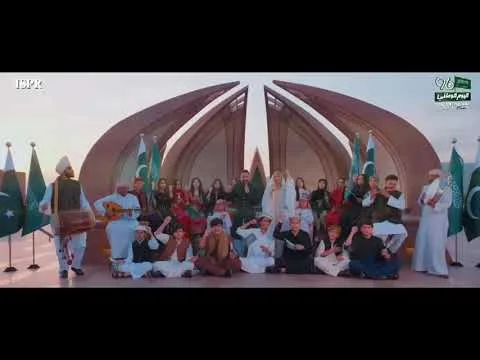
Rather than rushing into an Arabian battlefield, Pakistan’s military media machine reached for something considerably less expensive: the recording studio.
The result was Ek Duje Ke Dil Aur Jaan — “One Heart, One Soul” — accompanied by polished military imagery, marching formations and the sort of cinematic production values normally reserved for recruitment campaigns and national-day celebrations.
Take cover, rebels.
The counter-offensive has entered the music-video phase.
Foreign observers might struggle to understand how a military alliance designed around collective defence can produce a soundtrack instead of a strike package. In Islamabad, however, the logic is considerably easier to appreciate.
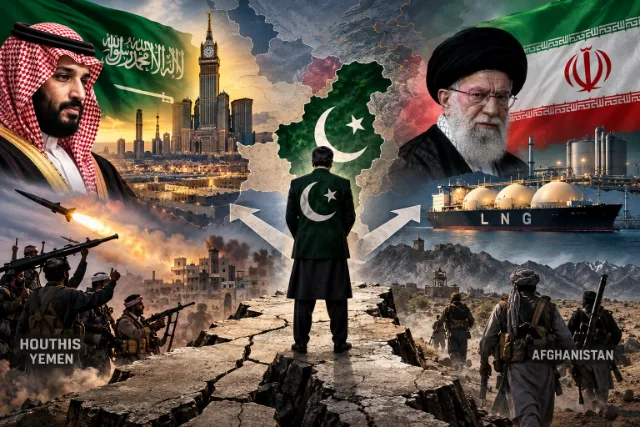
Pakistan is trapped inside a strategic equation with no particularly attractive answer.
Saudi Arabia is not simply another foreign-policy partner. Riyadh has long been an important source of financial support for Islamabad, including deposits, credit arrangements and energy assistance at moments when Pakistan’s external finances have been under severe pressure.
That makes Saudi expectations difficult to ignore.
But Iran is another matter entirely.
Pakistan shares a long and strategically sensitive border with Iran. Any direct Pakistani military intervention in a conflict involving Tehran’s regional interests could create consequences far beyond the battlefield in the Arabian Peninsula.
Islamabad therefore faces a peculiar problem: how do you reassure your richest strategic partner without provoking the neighbour you cannot afford to fight?
The answer, apparently, is to stall — but do it in 4K.
When Riyadh asks where the strike packages are, Islamabad can always point to the defence agreement, the military consultations and the carefully worded statements about solidarity.
And, if necessary, there is always another music video.
“Excellency, the high-level steering committee is reviewing the operational modality framework as we speak. In the meantime, have you seen the new video?”
It is diplomacy with a soundtrack.
The underlying problem, however, is much more serious than the joke suggests.
Pakistan’s military establishment has built its regional strategy around maintaining relationships with multiple, often competing powers. Saudi Arabia provides money and strategic depth in the Gulf. Iran provides a geographically unavoidable relationship on Pakistan’s western frontier. Neither relationship can simply be switched off.
A direct military commitment to Saudi Arabia could therefore carry a price Islamabad may be unwilling or unable to pay.
There is also the less glamorous question of money.
Deploying and sustaining a serious expeditionary force is expensive. Fighter aircraft require fuel, maintenance and logistics. Ground forces require transport and supplies. Ships, surveillance assets and air-defence systems do not operate on diplomatic assurances.
For a country already struggling with fiscal constraints, the economics of a distant military campaign are considerably less entertaining than the music video.
This is why Pakistan’s new foreign policy increasingly resembles an exercise in strategic choreography.
Stand beside Saudi Arabia.
Do not antagonise Iran.
Promise collective defence.
Avoid specifying exactly what that defence will look like.
And when the missiles start flying, turn up the volume.
There is method in the absurdity.
Pakistan cannot afford to abandon Saudi Arabia, but it also cannot casually march into a regional confrontation that could destabilise its western frontier. Its most practical option is therefore to preserve ambiguity for as long as possible — enough reassurance for Riyadh, enough restraint for Tehran and enough flexibility for Islamabad to avoid being trapped by its own commitments.
The danger is that ambiguity works only until somebody demands clarity.
A defence pact sounds impressive when it exists on paper. Its real meaning emerges when an ally is under attack and asks what its partners are actually prepared to do.
That is the test now facing Pakistan.
So far, Islamabad appears to have found a remarkably Pakistani solution.
Saudi Arabia asked for an army.
Pakistan sent a boy band.
And if the missiles keep coming, somewhere in Islamabad a sound engineer is probably already working on the acoustic version.