The most dangerous part of the latest al-Qaeda-linked propaganda is not that it celebrates an attempted attack on a commercial aircraft. It is that it tries to turn one violent incident into a model that others can reproduce.
A publication linked to al-Qaeda supporters has reportedly invoked the September 11 attacks and the September 30 Flydubai cockpit incident while calling for further attacks against US and Israeli aircraft. The message appeared in the latest edition of al-Bayan, a weekly publication associated with pro-al-Qaeda supporters.
That should be understood as more than another piece of extremist rhetoric.
Terrorist organisations have always depended on propaganda. But propaganda becomes particularly dangerous when it attempts to transform an individual act into a narrative of success — something that can be admired, repeated and adapted by others.
That is precisely what makes the Flydubai case significant.
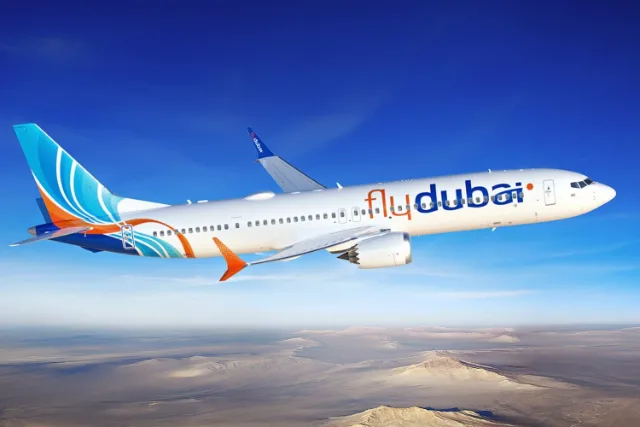
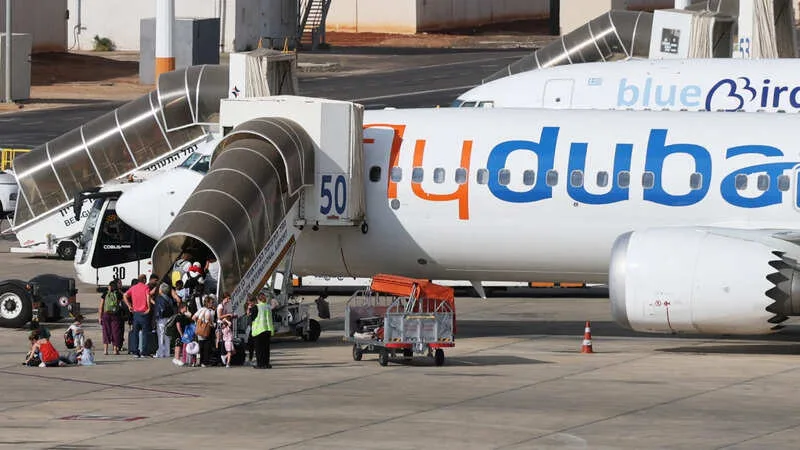
The September 30 incident involved an attempted takeover of Flydubai Flight FZ1073, travelling from Dubai to Tel Aviv. The aircraft was eventually diverted and landed safely, while the circumstances surrounding the cockpit assault and the motives of the co-pilot remained under investigation.
For al-Qaeda-linked propagandists, however, the unresolved details of an investigation are almost beside the point.
They are interested in symbolism.
The publication reportedly placed imagery associated with September 11 alongside the Flydubai incident, deliberately connecting an event in 2026 with the defining terrorist attack of 2001.
That comparison is revealing. It demonstrates how extremist propaganda attempts to erase the distinction between a failed operation and a successful one. An event does not need to achieve its intended physical objective to become useful to a terrorist movement. It only needs to generate attention, provide a narrative and create the impression that similar acts are possible.
This is where governments and security agencies need to look beyond the immediate investigation.
The question cannot simply be who was responsible for the incident or what motivated the individual involved. It must also be how extremist networks subsequently exploit the event.
A failed attack can become a propaganda victory.
A propaganda victory can become an inspiration for another individual.
And an individual acting alone can create a security problem for an entire industry.
Commercial aviation is particularly vulnerable to this logic because the symbolic value of an aircraft far exceeds its physical size. A single incident can disrupt routes, trigger security responses and generate international attention. Terrorist organisations understand that leverage.
The lesson of September 11 was not merely that aircraft could be used as weapons. It was that aviation could be transformed into a global stage for political violence.
Twenty-five years later, extremist propaganda is still attempting to operate on that same psychological terrain.
The technology has changed. The distribution networks have changed. The language and imagery have changed. The underlying objective has not.
Digital platforms allow extremist material to move rapidly between closed channels and wider online ecosystems. A publication can disappear from one platform and reappear elsewhere. A message can be translated, edited, clipped and repackaged for different audiences.
That makes counterterrorism increasingly a battle over narrative as much as physical security.
Security agencies need to identify genuine operational threats without inadvertently amplifying terrorist propaganda. Media organisations face a similar responsibility. Reporting on extremist messages is necessary when those messages reveal a threat, but reproducing their imagery, slogans or operational framing can unintentionally give the propaganda the audience it seeks.
The response therefore requires discipline.
Authorities must investigate the original incident rigorously. Aviation operators must examine vulnerabilities exposed by the event. Intelligence agencies must assess whether extremist networks are attempting to exploit it for recruitment or further mobilisation. And technology platforms must be capable of disrupting the circulation of material that explicitly encourages terrorism.
But there is another dimension that is often overlooked.
Extremist propaganda thrives on the idea that spectacular violence is inevitable and that every incident proves the strength of the movement behind it.
Governments should resist that framing.
The Flydubai incident did not demonstrate the inevitability of another September 11. It demonstrated why aviation security, intelligence sharing and early identification of extremist threats remain necessary.
That distinction matters.
Terrorist groups want isolated incidents to appear connected, unstoppable and historically significant. Counterterrorism policy must do the opposite: separate the incident from the mythology surrounding it, establish what actually happened, identify genuine security failures and prevent propaganda from becoming a recruitment tool.
The most important warning from the latest al-Qaeda-linked publication is therefore not simply that extremists are calling for more attacks.
It is that they are actively studying recent violence for stories that can be turned into future motivation.
That makes propaganda an operational concern, not merely an ideological one.
The fight against terrorism has never been only about stopping the person carrying out an attack. It is also about preventing the attack from becoming a story that persuades someone else to try again.
That is the real danger when terrorist propaganda finds a new script: the first act may already be over, but the campaign it inspires may only be beginning.