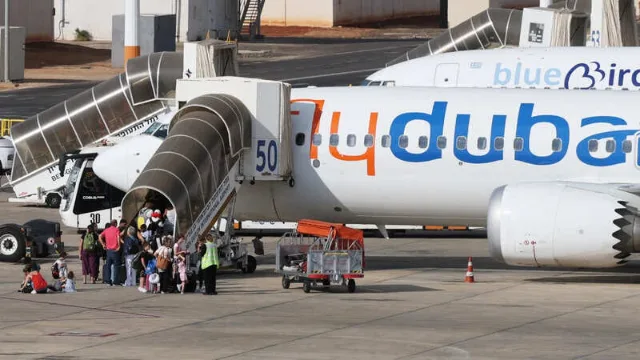

The Omani co-pilot accused of attacking the captain of a Flydubai flight bound for Israel allegedly planned to crash the aircraft into Ben Gurion Airport before he was hired by the airline, according to Israeli officials familiar with the investigation.
Hamam al-Hammami allegedly told investigators in the United Arab Emirates that he had researched airlines operating flights to Tel Aviv before applying for a position with Flydubai. He reportedly intended to take control of the aircraft after attacking the captain and crash it at Ben Gurion Airport near Tel Aviv.
The allegations concern Flydubai Flight FZ1073, which was travelling from Dubai to Tel Aviv on September 30 with more than 170 people aboard. During the flight, al-Hammami allegedly attacked Indian Captain Smit Machchhar with an emergency crash axe. Machchhar managed to open the cockpit door despite being injured, allowing passengers and crew members to enter and overpower the co-pilot. The aircraft subsequently made an emergency landing in Saudi Arabia.
The United Arab Emirates has described the incident as a terrorist attack. Al-Hammami remains in UAE custody while the investigation continues, and formal charges have not yet been publicly announced.
According to reports from Israeli media, al-Hammami told interrogators that his plan had been conceived before he joined Flydubai. He allegedly searched for airlines operating routes to Tel Aviv and chose Flydubai because of its flights to Israel.
Investigators are also examining whether he had previously considered carrying out a similar attack. Sources cited by Reuters said al-Hammami had operated an earlier flight to Tel Aviv and had allegedly intended to hijack and crash that aircraft as well, but abandoned the plan. The reason remains unclear, although one source said he may have known someone on board.
The revelations have intensified scrutiny of how al-Hammami was able to become a commercial pilot and operate an Israel-bound flight.
People familiar with the investigation have said he had previously been barred from flying by Oman because of concerns about extremist views. He was subsequently hired by Flydubai, with questions now being raised about how information concerning his background was shared between authorities and the airline.
The investigation has expanded beyond the September 30 attack itself. Authorities in the UAE, Israel and Saudi Arabia are examining the suspect’s background, while questions have also emerged about his previous activities and movements outside the Gulf.
Israeli Prime Minister Benjamin Netanyahu has ordered a review of security arrangements for foreign commercial flights arriving in Israel following the incident. The review is intended to examine how crew members are vetted and how information about potential security threats is shared.
The case has also prompted questions over Israel’s existing restrictions and screening procedures for foreign airline crews. Israel and Oman do not maintain formal diplomatic relations, while Israeli officials have said there are longstanding arrangements concerning pilots from countries without diplomatic ties to Israel.
The investigation is still developing, and authorities have not publicly established whether al-Hammami acted entirely alone or had assistance from an extremist organisation. A Gulf diplomat previously told the Associated Press that investigators were examining whether he was a lone actor or had connections to extremist groups.
Reports that the UAE could seek the death penalty have also emerged. Israeli media, citing Emirati sources, reported that authorities were considering the harshest available punishment. Any final decision would depend on the charges brought and the outcome of the legal process.
The case has placed renewed attention on a critical vulnerability in aviation security: the possibility that a threat may originate not from a passenger attempting to enter an aircraft, but from someone already authorised to occupy the cockpit.
For investigators, the central questions now extend beyond what happened during Flight FZ1073. They include what authorities knew about al-Hammami before he joined Flydubai, whether that information was adequately shared, and how an individual previously flagged over alleged extremist views was able to obtain access to a passenger aircraft operating an international route.