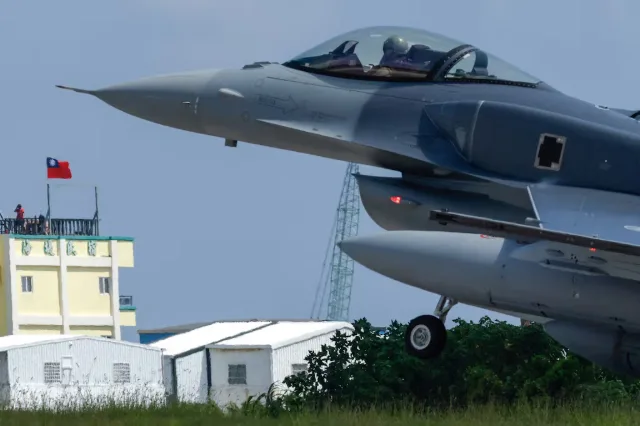
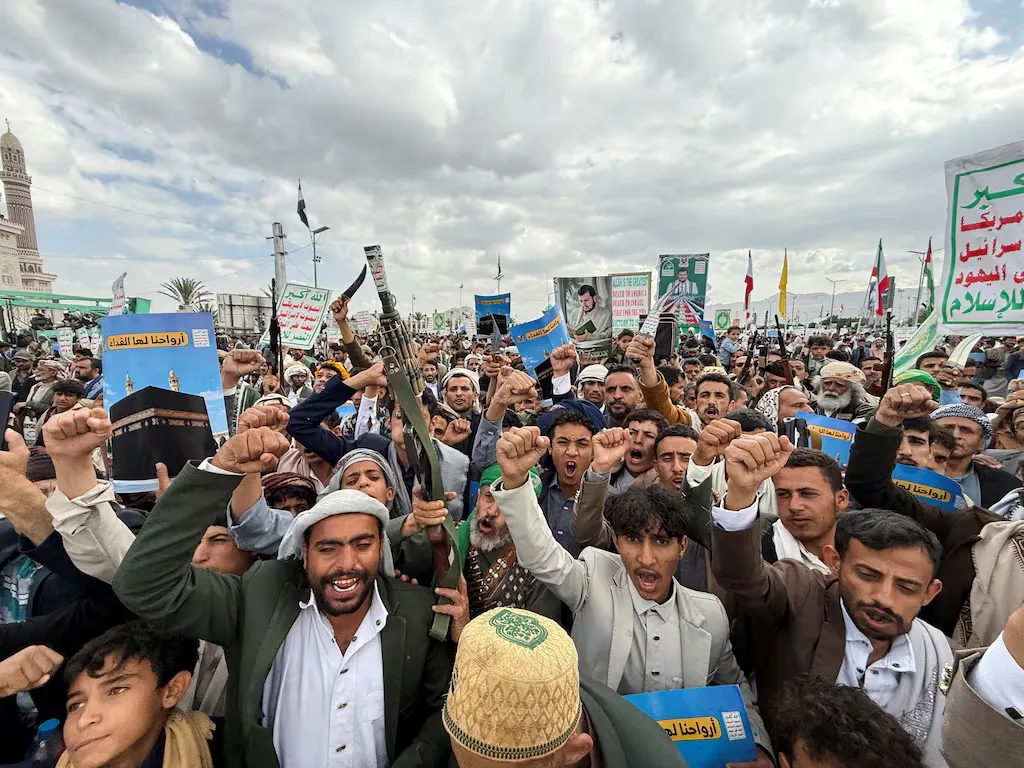
Saudi Arabia is preparing for a new military offensive against Houthi forces in Yemen, with Riyadh considering a limited coastal assault or a broader campaign across several fronts to regain control of the Bab el-Mandeb strait, according to regional and Western officials familiar with the plans.
The operation would be led by Saudi-backed Yemeni forces on the ground and supported by Saudi air power. Depending on the scale of the campaign, more than 100,000 Yemeni troops could be mobilized.
The immediate objective is to reverse recent Houthi advances along Yemen’s Red Sea coast. The group moved southward last month and took control of areas around the Bab el-Mandeb, giving it influence over one of the world’s most important maritime passages.
Saudi officials are weighing two broad options. One would concentrate forces around Bab el-Mandeb and nearby coastal areas. The other would involve coordinated attacks on several fronts, including Al-Bayda, Marib, Taiz and Al-Jawf.
No firm date has been set for the operation. Officials familiar with the preparations gave possible timelines ranging from within days to after the U.S. midterm elections in November.
The Bab el-Mandeb connects the Red Sea with the Gulf of Aden and provides a critical maritime link between Europe and Asia. Its strategic importance has increased as the wider regional conflict has disrupted other shipping routes, including the Strait of Hormuz.
Saudi Arabia has concluded that negotiations with the Houthis would be difficult while the group retains control of territory around Bab el-Mandeb, according to officials and Western diplomats familiar with Riyadh’s position.
The planned offensive would mark a major shift from the relative calm that followed a 2022 truce between the Houthis and their opponents. That truce largely held until this year, when the conflict widened amid the broader confrontation involving Iran. Houthi forces have since carried out missile and drone attacks targeting Saudi shipping and energy infrastructure.
Saudi Arabia intervened directly in Yemen’s civil war in 2015 at the head of an Arab coalition supporting the internationally recognized government after the Houthis seized Sanaa. The intervention failed to dislodge the group and evolved into a prolonged conflict that produced a severe humanitarian crisis.
A new ground offensive would carry substantial military risks. Michael Ratney, a former U.S. ambassador to Saudi Arabia, said he expected any Saudi operation to be considerably narrower than the campaign launched in 2015, with the immediate objective more likely to be restoring control of coastal territory and maritime access than defeating the Houthis outright.
The United States is already providing Saudi Arabia with military advisers and intelligence, including targeting information, to support Saudi air operations in Yemen, according to a Western diplomat. Washington is not, however, expected to take a direct combat role.
Saudi Arabia is also drawing on military assistance from Turkey and Pakistan. The two countries signed a joint defense agreement with Riyadh last month. Pakistani officials said Islamabad recently sent four cargo aircraft carrying air-defense systems, light artillery, drones and counter-drone equipment to Aden, the seat of Yemen’s Saudi-backed government.
Pakistani military advisers are also supporting Yemeni forces alongside Saudi counterparts, according to officials familiar with the deployment. Turkey-made drones acquired by Saudi Arabia before the latest escalation have also been used over Yemen.
Saudi Arabia’s preparations are complicated by the need to protect its own territory and critical infrastructure from Houthi missile and drone attacks. Riyadh has sought additional defensive assistance from allies as it considers expanding military operations.
Pakistan has deployed tens of thousands of troops to Saudi Arabia for defensive duties, including protection of the kingdom’s borders and assistance with intercepting drones and missiles. Islamabad has not decided to send those forces into Yemen for combat operations, according to a Pakistani official.
The Saudi-backed Yemeni camp also remains politically and militarily fragmented. Fighting between Saudi-backed forces and UAE-supported southern fighters last winter exposed divisions within the anti-Houthi coalition and resulted in territorial changes in eastern Yemen.
The effectiveness of any new offensive will therefore depend heavily on the performance and coordination of Yemeni ground forces. A Saudi campaign aimed at reopening Bab el-Mandeb could also create a new front in a regional conflict that has already disrupted major energy and shipping routes.
For Riyadh, the immediate challenge is to restore secure maritime access without allowing a campaign intended to reopen the Red Sea corridor to develop into another prolonged war in Yemen.