
Ukraine says its long-range strikes have put more than half of Russia’s oil refining capacity out of action, marking an escalation in Kyiv’s campaign against an industry that is central to both Russia’s economy and its ability to sustain military operations.
Ukraine’s Defence Ministry said Sunday that attacks on refineries and oil-processing facilities in locations including Moscow, Yaroslavl, Ust-Luga, Perm, Saratov and Syzran had disabled 51% of Russia’s refining capacity. The figure has not been independently verified.
The claim comes after months of increasingly frequent Ukrainian drone strikes deep inside Russian territory. Kyiv has made energy infrastructure a priority target, seeking to disrupt fuel supplies and increase the economic cost of Moscow’s war effort.
The impact is already visible in Russia’s refining sector, although the precise scale remains disputed.
The International Energy Agency has reported a substantial decline in Russian refinery output following repeated Ukrainian attacks. Refinery throughput fell to about 3.8 million barrels per day in June, according to an independent assessment cited by Ukrainian sources, while diesel production has dropped by roughly 30%.
Russia has responded with measures aimed at protecting domestic fuel supplies, including restrictions on fuel exports. Authorities have also used emergency measures to maintain gasoline availability as disruptions spread across parts of the country.
The Ukrainian figure, however, needs to be treated cautiously.
“Refining capacity” refers to the amount a refinery can theoretically process rather than the volume actually being produced at a given moment. A refinery can have part of its capacity disabled while continuing to operate through other units, repairs or alternative facilities.
Ukraine has not published a detailed methodology showing how the 51% figure was calculated or how much of the affected capacity is expected to remain offline.
That uncertainty does not mean the attacks have had little effect.
Russia has one of the world’s largest refining industries, and repeated strikes have forced refineries to operate under increasingly difficult conditions. Some facilities have been hit multiple times, creating a cycle of emergency repairs and reduced production. The IEA has warned that damage to complex refining units can take considerably longer to repair than damage to less sophisticated equipment.
The geographical spread of the attacks is also significant.
Ukrainian drones have reached targets hundreds of kilometres inside Russia, including facilities around Moscow and major refining centres farther east. The campaign demonstrates Kyiv’s growing ability to strike infrastructure well beyond the immediate battlefield.
For Ukraine, the objective is broader than disrupting fuel supplies.
Oil and petroleum products remain a major source of revenue for the Russian state. By attacking refineries rather than focusing exclusively on crude production, Kyiv is targeting a critical stage between extraction and the delivery of usable fuels.
The strategy also creates pressure on Russia’s military logistics.
Fuel is essential for aircraft, armoured vehicles, transport fleets and other military operations. A prolonged reduction in domestic refining could therefore force Moscow to redirect supplies, increase imports or draw more heavily on existing stocks.
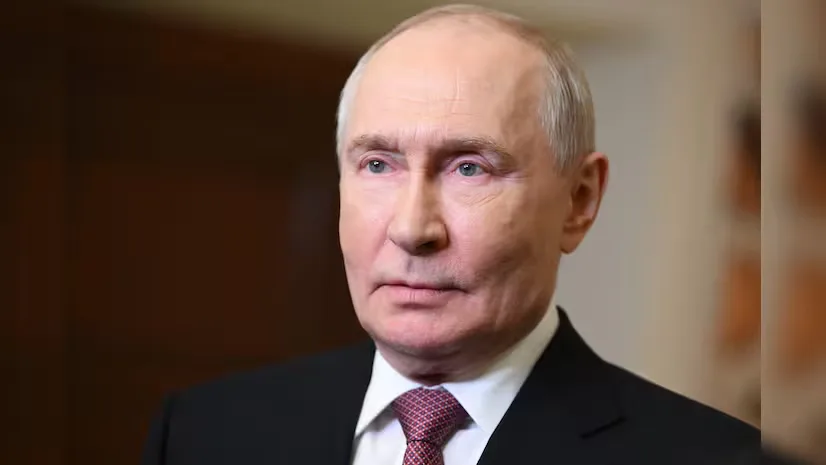
Russian President Vladimir Putin has acknowledged that the Ukrainian strikes have affected the economy. In remarks at the Valdai Club last week, he said the attacks had cost Russia roughly 1% of gross domestic product, while arguing that Ukraine had achieved only part of its objective.
That admission provides an indication that the campaign is producing economic consequences, even though Moscow has not publicly confirmed Kyiv’s assessment of refining capacity lost.
The strikes are also contributing to a wider transformation of the war.
With the ground front largely static, both Russia and Ukraine have increasingly relied on long-range drones and missiles to attack infrastructure, logistics and industrial targets far behind the front lines. The result is a war in which economic infrastructure has become an increasingly important extension of the battlefield.
Ukraine has said it intends to expand its deep-strike capabilities further. Its Defence Ministry said production and procurement of long-range attack drones had tripled this year and that the country would continue expanding its ability to strike targets deep inside Russia.
For Moscow, the challenge is therefore not simply repairing individual refineries.
It is protecting an extensive energy network from repeated attacks while maintaining fuel supplies for both the civilian economy and the military.
For Kyiv, the calculation is equally clear: if Russia’s military campaign depends on fuel, then the infrastructure producing that fuel becomes a legitimate strategic pressure point in its war effort.
Whether 51% of Russian refining capacity is actually offline remains unconfirmed.
But the broader trend is harder to dismiss. Repeated Ukrainian strikes are disrupting Russia’s refining industry, contributing to lower fuel production and forcing Moscow to take increasingly aggressive measures to protect domestic supplies.
The refinery war is becoming a war of endurance — and Ukraine is betting that the longer it continues, the more expensive Russia’s ability to sustain its military campaign will become.