
The attempted takeover of a Flydubai flight bound for Israel is no longer being investigated simply as a violent act inside an aircraft. New revelations suggest the alleged attacker may have planned the operation before he was ever hired by the airline, raising a far more serious question: how did a man who allegedly intended to crash an aircraft into Israel make it into the cockpit in the first place?
Two Israeli officials familiar with the investigation told Reuters that the Omani co-pilot told UAE interrogators he had planned the attack before joining Flydubai. A third source briefed on the investigation said he intended to crash the September 30 flight into Ben Gurion Airport near Tel Aviv.
The revelation, if confirmed, fundamentally changes the character of the case.
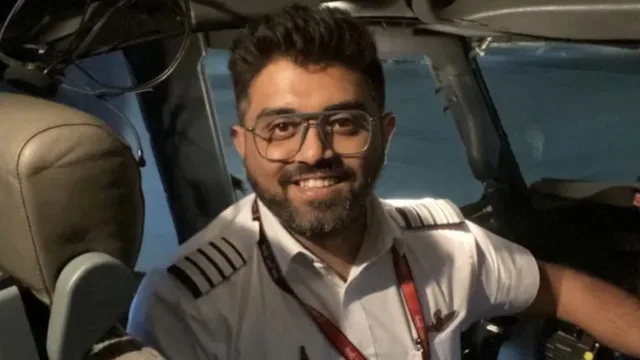
Flight FZ1073 was travelling from Dubai to Tel Aviv when the co-pilot allegedly attacked Indian Captain Smit Machchhar with an emergency crash axe. The aircraft entered a steep descent before Machchhar managed to open the cockpit door. Passengers and crew members then intervened and subdued the attacker, while reserve pilots helped regain control of the aircraft.
The plane was eventually diverted to Saudi Arabia and landed safely.
What prevented a catastrophe was therefore not simply the aviation system working as designed. It was the intervention of the captain, passengers and other crew members at a moment when the cockpit itself had become the source of the threat.
The latest investigation suggests the danger may have existed long before the aircraft took off.
According to the Israeli officials, the co-pilot had searched for airlines operating flights to Tel Aviv and subsequently applied to Flydubai. The third source said he had previously operated a Tel Aviv-bound flight and had considered hijacking and crashing that aircraft as well, but abandoned the plan. The reason remains unclear, although investigators believe he may have known someone aboard.
These allegations remain part of an ongoing investigation. UAE authorities have not publicly disclosed formal charges against the co-pilot, and his identity has not been officially confirmed by either Flydubai or the UAE.
But the questions surrounding his background are already becoming difficult to ignore.
Earlier reports indicated that the suspect had previously been identified as a security concern in Oman. ABC News reported that he was suspended from flying duties while training with Oman Air after authorities allegedly found extremist material in his possession. He was reportedly moved to an administrative role rather than permanently removed from the airline.
Other reports have raised questions about his subsequent employment history, including training with Royal Air Maroc and time spent in Australia and New Zealand. Authorities in Australia are examining his activities during his time there as part of the wider investigation.
None of these elements, taken individually, establishes that the airline should have known what he allegedly intended to do.
Together, however, they raise a broader question about how information concerning aviation personnel moves between countries.
A pilot can pass through several jurisdictions during a career. Security concerns identified in one country may not automatically follow that individual to another airline. Criminal-background checks may reveal little about ideological radicalisation. Aviation regulators may focus primarily on licensing and professional competence rather than intelligence assessments.
That creates a gap between aviation safety and national security.
The Flydubai case appears to sit directly inside that gap.
Israel is now reviewing the security arrangements governing foreign airlines operating flights to the country. The issue is particularly sensitive because Oman does not have diplomatic relations with Israel, yet an Omani national was operating as a co-pilot on a Tel Aviv-bound passenger flight.
The central question is not simply why an Omani pilot was permitted to fly the route.
It is whether the relevant authorities had access to the information needed to assess the security implications of his presence in the cockpit.
That distinction matters.
Modern aviation security is built around layers. Airlines vet employees. Regulators oversee licensing. Governments conduct security assessments. Intelligence agencies identify threats. Airports control access. No single layer is expected to catch every threat.
But a system is only as strong as the connections between those layers.
If one country identifies a potential security concern but does not communicate it, another airline may unknowingly employ the individual. If an airline conducts only conventional background checks, it may never see intelligence that exists elsewhere. If a destination country's security authorities do not receive complete crew information, they cannot conduct whatever assessment they are responsible for performing.
The result is a fragmented security chain in which everyone may perform part of the job while nobody sees the entire picture.
That is the issue investigators now have to confront.
The attempted attack also demonstrates why aviation security cannot be reduced to airport screening. The threat in this case was not necessarily a passenger carrying a prohibited object through security. It was an individual who had legitimate access to the most restricted part of the aircraft.
Cockpit access is based on trust.
When that trust is deliberately abused, conventional security measures can become almost irrelevant.
This is why the recruitment and continuing assessment of flight crews deserves as much attention as passenger screening.
The emerging details should not lead to blanket suspicion of foreign pilots or particular nationalities. Such an approach would be both unfair and strategically counterproductive. The focus should instead be on whether aviation authorities and airlines possess reliable mechanisms for identifying credible security concerns, sharing them lawfully and acting on them before an individual reaches a cockpit.
The Flydubai incident was stopped because Captain Machchhar fought back and managed to open the cockpit door, while passengers and fellow pilots intervened.
That was extraordinary courage.
But aviation security cannot depend on extraordinary courage being available at the precise moment a system fails.
The deeper lesson from this case is therefore uncomfortable.
The most dangerous threat to an aircraft may not always be someone trying to break into the cockpit.
Sometimes it may be someone who was trusted to be inside it.
And if investigators ultimately confirm that the Flydubai co-pilot had planned the attack before he was hired, the most important question will not be how he attempted to bring down the aircraft.
It will be how the warning signs failed to follow him into the cockpit.
Tighten the repeated argumentSeparate reporting from analysis