The opposite may be closer to the truth. Political dissent remains tightly controlled, independent civil society faces severe restrictions, religious communities operate under increasing state supervision, and activists who challenge the Communist Party’s authority can face detention or prosecution. The international conversation about China has become increasingly dominated by economics and geopolitics. Human rights should not disappear from that conversation simply because Beijing has become too important to ignore.
Engagement with China is necessary. Silence is not.
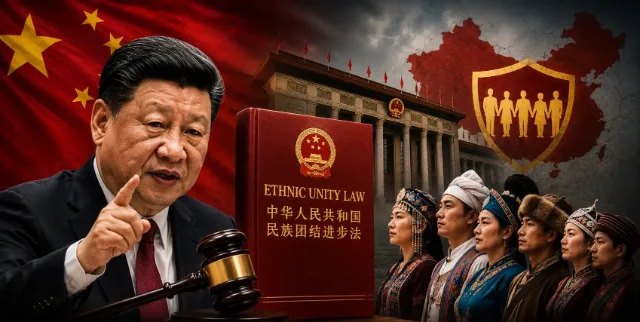
Over the past decade, the Chinese state has expanded its surveillance and security apparatus while narrowing the space available to political opponents, journalists, lawyers, activists and independent organisations. Prisoners of conscience remain a persistent concern, particularly among those advocating democratic reform, religious freedom or greater rights for ethnic minorities.
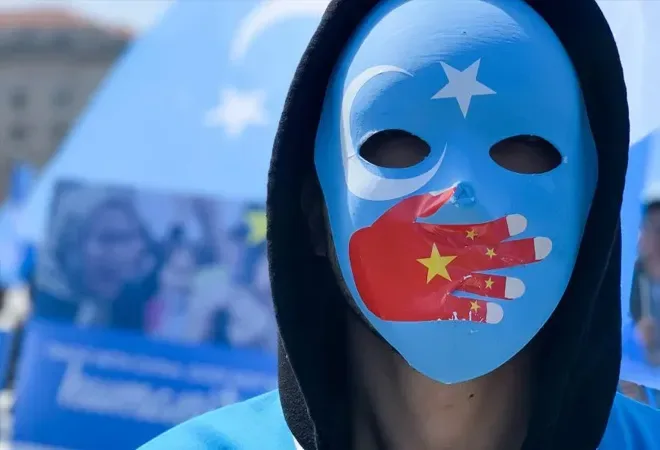
The most severe international scrutiny has focused on Xinjiang and the treatment of Uyghur Muslims. Human rights organisations and several governments have described the policies implemented there in terms including crimes against humanity, while some governments have characterised them as genocide. Allegations of mass detention, forced labour, family separation and cultural assimilation have generated sustained international condemnation.
Beijing rejects these accusations and maintains that its policies are aimed at security, development and combating extremism. But the scale and persistence of the allegations make Xinjiang impossible to treat as a peripheral issue.
Nor is the problem confined to one region or one ethnic group.
Religious communities across China have faced restrictions as the state has sought greater control over religious institutions. Christian pastors, Tibetan Buddhists, Falun Gong practitioners and other faith communities have all been the subject of international concern.
The issue is ultimately about more than religious practice. It is about whether institutions outside direct party control are permitted to retain meaningful independence.
Tibet presents a similar struggle between state authority and cultural identity. Tibetan activists and advocacy groups continue to raise concerns over restrictions on religious practice, cultural expression and political activity. The unresolved fate of the Panchen Lama, who disappeared from public view in 1995 after being recognised by the Dalai Lama, remains one of the most enduring symbols of Beijing’s control over Tibetan religious affairs.
Hong Kong offers perhaps the clearest example of how quickly political space can contract.
The introduction of the National Security Law fundamentally altered the territory’s political environment. Pro-democracy activists, journalists, lawyers and civil society figures have been arrested or prosecuted. Figures such as Jimmy Lai and Joshua Wong have become international symbols of the shrinking space for political dissent.
The promise of “One Country, Two Systems” was never a guarantee that Hong Kong would remain politically unchanged forever. But the question facing the international community is whether the freedoms associated with that framework have been substantially eroded and whether peaceful political activity can still take place without being treated as a threat to national security.
That question matters because Hong Kong was once presented as evidence that China could accommodate a distinct political and legal environment within the broader Chinese state.
The narrowing of that space has implications far beyond the territory itself.
China’s reach has also increasingly extended beyond its borders. Human rights advocates have alleged that Chinese authorities monitor, pressure and intimidate dissidents and diaspora communities overseas. Such allegations raise a different but equally important concern: whether authoritarian political practices are being exported into democratic societies.
If governments allow foreign intimidation of exiled activists, journalists, scholars and community leaders to go unanswered, the consequences extend beyond individual victims. They touch the sovereignty of the countries in which those people live and the ability of democratic institutions to protect political freedom.
This is why China’s human rights record cannot be separated entirely from the broader international relationship with Beijing.
The Taiwan Strait makes the connection particularly clear. Rising tensions have already placed regional security under pressure, while any conflict would carry consequences for global trade and international stability. Governments therefore have strong reasons to maintain communication with Beijing and prevent miscalculation.
But strategic necessity should not become a licence for diplomatic silence.
There is a persistent temptation in international politics to divide China into two separate questions: the China that governments must deal with and the China whose domestic conduct they would rather not discuss. That distinction is increasingly difficult to sustain.
A country’s treatment of its own citizens tells the world something about the political system that will also shape its behaviour beyond its borders.
None of this means that every allegation against China should automatically be accepted as fact. Nor should complex questions involving Xinjiang, Tibet, Hong Kong or religious freedom be reduced to slogans. Serious international policy requires evidence, scrutiny and distinctions between established facts, allegations and political claims.
But scrutiny requires attention. And attention is precisely what human rights concerns risk losing as governments focus on trade agreements, artificial intelligence, supply chains, military competition and geopolitical bargaining.
That would be a mistake.
Human rights are not a luxury to be discussed when relations are comfortable. They are most important when raising them carries a diplomatic cost.
China is too consequential for the world to disengage from. It is also too consequential for governments to treat human rights as an inconvenient subject that can be postponed indefinitely.
The international community does not have to choose between engagement and principle. It can negotiate with Beijing while speaking clearly about political repression. It can pursue trade while defending religious freedom. It can seek stability in the Taiwan Strait while refusing to ignore the rights of people inside China.
The real test is whether governments will maintain that position when strategic interests make it uncomfortable.
China’s global influence is growing. Its economic power is substantial, its technological ambitions are expanding and its role in international security is becoming harder to avoid.
That makes the question of human rights more important, not less.
The world should not mistake diplomatic engagement for acquiescence. Nor should Beijing’s growing influence make the suffering of those without political power easier to overlook.
The victims of repression do not disappear when the headlines move on. The world simply stops looking.
And that is precisely why it must keep looking.