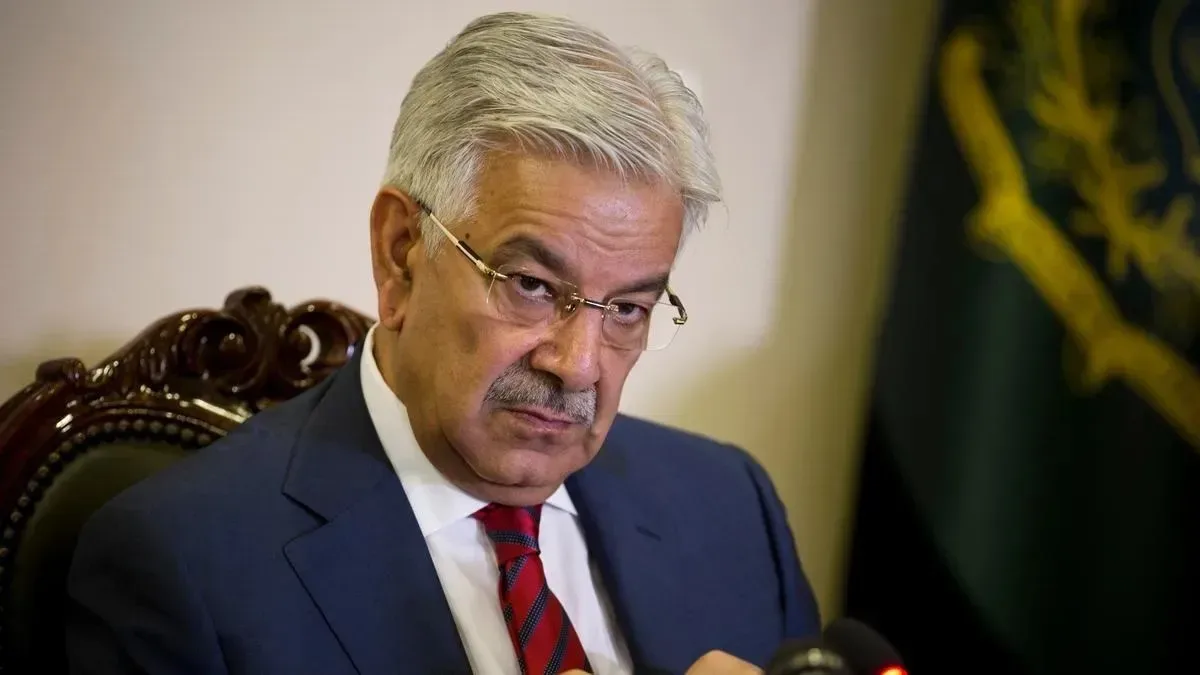
Pakistan Defence Minister Khawaja Asif has raised concerns over the alleged plans of senior government bureaucrats to move abroad permanently, questioning their loyalty to the country. In a recent post, Asif claimed that several officials had secured homes or established plans for permanent residency in countries such as Canada, the United States, the United Kingdom, and other European nations, with Portugal being a particularly popular destination.
Asif alleged that these officials had made arrangements to settle overseas while continuing to serve in influential government positions, sparking concerns over their commitment to Pakistan and their responsibilities. The minister questioned whether government officers who allegedly planned their departure while holding public office remained genuinely committed to their homeland and jobs.
According to Asif, some of the bureaucrats involved had held powerful positions and maintained close connections with successive governments. However, he did not name any of the officials allegedly preparing to leave Pakistan. The minister also alleged that an intermediary who had been arranging permanent residency for influential bureaucrats had gone missing after collecting large sums of money.
The allegations have raised broader questions about the accountability of Pakistan's senior bureaucracy, particularly concerning overseas property, residency arrangements, and the responsibilities of officials holding public office. The controversy has also drawn attention to the relationship between the civilian administration and the powerful military establishment in Pakistan.
Pakistan's current political system is shaped by the government led by Prime Minister Shehbaz Sharif and his Pakistan Muslim League-Nawaz (PML-N), which has the support of the Pakistan People's Party (PPP). The civilian government operates within a political system in which the military retains substantial influence. Army chief Asim Munir has also emerged as a prominent figure in Pakistan's political and foreign policy sphere.
The allegations made by Asif have not been accompanied by publicly disclosed documentary evidence, and it remains unclear how many officials are allegedly planning to relocate, whether they have already obtained foreign residency, or whether any government inquiry has been initiated. The claims have sparked concerns over public trust and administrative accountability in Pakistan.
The issue has also raised questions about the implications of senior officials' alleged plans to settle overseas on the country's political structure and the relationship between elected governments, state institutions, and the civil service. Asif's remarks have drawn attention to the need for greater transparency and accountability in the government, particularly concerning the activities of senior bureaucrats.
In recent years, Pakistan has faced several challenges, including political instability, economic crisis, and security concerns. The allegations made by Asif have added to the concerns over the country's governance and the commitment of its officials to the nation. The government has not yet commented on the allegations, and it remains to be seen how the situation will unfold.
The controversy has sparked a debate over the role of bureaucrats in Pakistan and their responsibilities towards the country. The allegations have also raised questions about the effectiveness of the government's accountability mechanisms and the need for greater transparency in the activities of senior officials. As the situation develops, it is likely to have significant implications for Pakistan's political landscape and the trust of its citizens in the government.
Background
Pakistan's bureaucracy has long been a subject of controversy, with concerns over corruption, nepotism, and a lack of accountability. The allegations made by Asif have added to these concerns, sparking a debate over the need for reform and greater transparency in the government. The country's political system, which is shaped by the powerful military establishment, has also been a subject of controversy, with concerns over the influence of the army on civilian institutions.
Implications
The allegations made by Asif have significant implications for Pakistan's political landscape and the trust of its citizens in the government. The controversy has sparked a debate over the role of bureaucrats in Pakistan and their responsibilities towards the country. The allegations have also raised questions about the effectiveness of the government's accountability mechanisms and the need for greater transparency in the activities of senior officials. As the situation develops, it is likely to have significant implications for Pakistan's governance and the commitment of its officials to the nation.
The issue has also raised questions about the relationship between the civilian administration and the powerful military establishment in Pakistan. The allegations made by Asif have sparked concerns over the influence of the army on civilian institutions and the need for greater transparency in the activities of senior officials. The controversy has added to the concerns over the country's governance and the commitment of its officials to the nation.
In conclusion, the allegations made by Khawaja Asif have raised significant concerns over the loyalty and commitment of Pakistan's senior bureaucrats to the country. The controversy has sparked a debate over the need for greater transparency and accountability in the government, particularly concerning the activities of senior officials. As the situation develops, it is likely to have significant implications for Pakistan's political landscape and the trust of its citizens in the government.