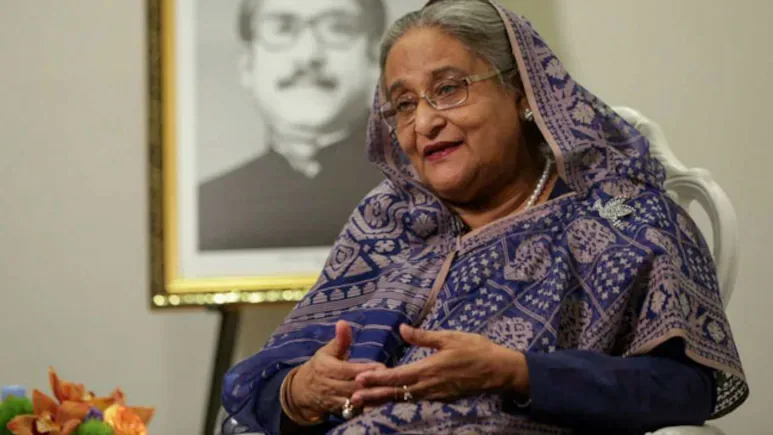
Former Bangladesh Prime Minister Sheikh Hasina has reiterated her intention to return to the country in December, but a combination of legal, diplomatic and political obstacles makes an immediate return difficult. Her request for fresh travel documents has been rejected by Dhaka, which continues to demand her extradition from India.
Hasina, who has been living in India since fleeing Bangladesh in August 2024, has said she intends to return and surrender before a court. Her lawyers recently approached the Bangladesh High Commission in New Delhi seeking a new passport and national identity card after her existing documents were revoked. The request marked her first known direct communication with Bangladeshi authorities since leaving the country.
The Bangladesh government rejected the application and insisted that her return must take place through the extradition process. State Minister for Foreign Affairs Humayun Kobir described Hasina as a fugitive and said Dhaka would continue seeking her handover under the extradition treaty between the two countries.
There are five major obstacles to her proposed return.
The first is the refusal to issue fresh travel documents. Without a valid passport or other authorised travel document, Hasina cannot follow the conventional route for returning to Bangladesh. Dhaka has made clear that it does not intend to facilitate her return through a passport application and instead wants India to hand her over through formal legal channels. Although Hasina's lawyers have cited her Bangladeshi nationality and international obligations, the government has shown no indication of reconsidering its position.
The second obstacle is the extradition dispute between India and Bangladesh. Dhaka has repeatedly requested Hasina's extradition under the bilateral treaty, but the legal position is complicated. The agreement contains provisions concerning political offences and circumstances in which extradition may be refused. Whether those provisions apply to Hasina's case would depend on the nature of the charges, the evidence presented and the interpretation of the treaty.
Bangladesh has argued that the charges against Hasina involve serious criminal offences rather than political offences. India, meanwhile, has not publicly announced a decision to extradite her. According to reports citing sources familiar with New Delhi's position, India is unlikely to agree to the request under the circumstances surrounding her trial and conviction. The Indian government has previously said it is examining Bangladesh's extradition request.
The third and most consequential obstacle is the death sentence imposed on Hasina. In November 2025, Bangladesh's International Crimes Tribunal convicted her in absentia of crimes against humanity over the deadly crackdown on the 2024 student-led uprising. She was sentenced to death, a verdict she has rejected and described as politically motivated. Her return would therefore expose her to arrest and the enforcement of the sentence unless the legal proceedings or their outcome were changed.
Hasina has questioned the fairness of the judicial process and called for an independent trial. The United Nations estimated that as many as 1,400 people may have been killed during the 2024 crackdown. The allegations against her remain central to the political and legal dispute surrounding her removal from power. Her opponents demand accountability, while her supporters argue that she should receive due process and the opportunity to defend herself.
The fourth obstacle is the risk of renewed political violence and instability. Hasina remains a deeply polarising figure in Bangladesh. Her return could mobilise Awami League supporters, while opponents may organise demonstrations demanding that the sentence be enforced. The country is still dealing with the political consequences of the 2024 uprising, and a high-profile return by the former prime minister could intensify existing divisions.
There are also concerns about her personal safety. Hasina has said she understands the risks of returning and could face arrest, violence or even death. Bangladesh has a history of political assassinations and violent transfers of power, adding to the uncertainty surrounding any proposed return. The government in Dhaka would have to manage both the legal process and the potential security consequences of her arrival.
The fifth obstacle is the political position of the Awami League. The party that governed Bangladesh under Hasina has been banned from political activity, while several of its senior leaders have been arrested or are living in exile. Her return could energise supporters and restore some visibility to the party, but it would not automatically resolve its legal and organisational difficulties.
Some analysts believe the December announcement may also be intended to keep Hasina politically relevant and maintain the morale of Awami League supporters. Her passport application has given the party a focal point at a time when its leadership structure and political future remain uncertain. However, Hasina and her supporters have continued to insist that she intends to return.
A travel pass could theoretically offer an alternative to a conventional passport. Bangladesh's current Prime Minister Tarique Rahman used such a document to return from the United Kingdom in December 2025, after his legal difficulties had been resolved. Hasina's circumstances are substantially different: she faces a death sentence, has an active extradition dispute and remains the subject of intense political opposition. The precedent therefore offers no guarantee that a similar arrangement would be made available to her.
The dispute also has significant implications for India-Bangladesh relations. Hasina's presence in India has been a persistent source of tension since the change of government in Dhaka. Bangladesh wants her extradition, while India must weigh its treaty obligations, legal considerations and broader diplomatic interests. New Delhi has an interest in improving relations with the current Bangladeshi government, but the handling of a former leader who sought refuge in India also carries wider diplomatic implications.
For now, Hasina's December return remains a stated intention rather than a confirmed plan. The rejection of her passport request, the extradition dispute, her death sentence and the possibility of renewed unrest all present substantial barriers. Unless there is a significant change in the legal or diplomatic position, her return in December appears difficult to arrange.
The immediate question is therefore not simply whether Hasina wants to return, but whether the governments and institutions involved can establish a legal and political route that allows it to happen without triggering another crisis in Bangladesh.