The United States carried out airstrikes against an Iranian missile launch site on Qeshm Island near the Strait of Hormuz on Tuesday, November 17, following an Iranian drone attack targeting a US military radar facility in Bahrain. The exchange marked a renewed escalation in hostilities after a period of relative calm between Washington and Tehran.
A US military official confirmed that American fighter aircraft struck a site operated by Iran's Islamic Revolutionary Guard Corps (IRGC), using precision-guided weapons. The operation was described as an act of self-defence in response to Iranian attacks against US personnel and military assets.
Iranian authorities also confirmed that Qeshm Island had been targeted. Ahmad Nafisi, deputy governor of Hormozgan province, said the strikes caused no damage to residential areas, commercial establishments or critical infrastructure. Iranian state media reported that five or six explosions were heard on the island, while videos circulating on social media showed smoke rising from the area.
The American strikes followed an announcement by Iran's Revolutionary Guards that drones had targeted a US-operated radar system at Sheikh Isa Air Base in Bahrain. The IRGC described the operation as retaliation for what it called repeated violations of Iranian airspace by American military drones.
Bahrain said its air defence systems intercepted the incoming drones, with no casualties or damage reported. US Central Command also rejected the Iranian claim that the radar facility had been hit, stating that the drones were intercepted without damage to American equipment or injury to personnel.
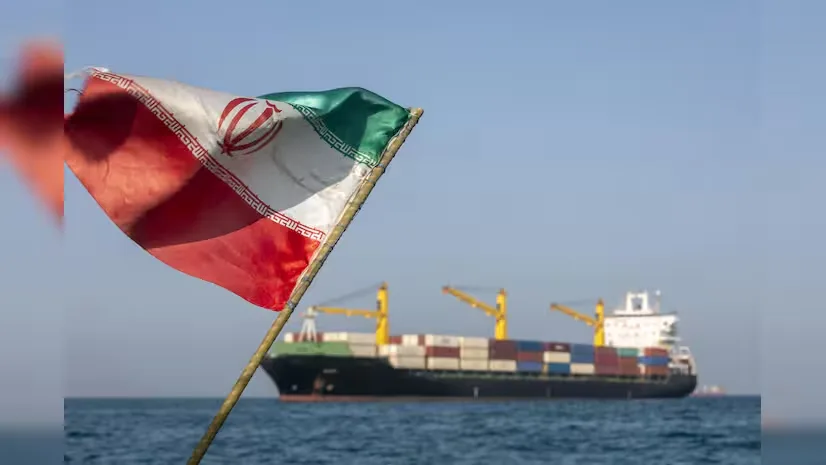
The exchange came amid growing tensions around the Strait of Hormuz, one of the world's most strategically important maritime routes. The narrow waterway connects the Persian Gulf with the Gulf of Oman and carries a substantial share of global oil and liquefied natural gas shipments. Qeshm Island occupies a strategically important position close to the strait and hosts Iranian military installations.
Since the outbreak of the US-Iran conflict in February 2026, Tehran has attempted to restrict maritime traffic through the waterway, requiring vessels to use routes authorised by Iran. Several commercial ships have subsequently come under attack, while shipping activity has been severely disrupted.
Washington has responded with a naval blockade of Iranian ports and operations intended to protect commercial shipping. US forces have also said they cleared mines from the waterway to facilitate maritime movement.
The latest strike is not the first American operation against Qeshm Island. On November 2, the United States carried out limited strikes in the area, which American officials described as defensive measures against Iranian threats to US military assets and commercial shipping. The November 17 operation represents a further expansion of these exchanges.
The developments have coincided with diplomatic efforts by Oman and Qatar to prevent the conflict from escalating further. However, the latest military exchanges have raised concerns that the fragile diplomatic process could be undermined by renewed confrontation.
Iranian parliamentary speaker Mohammad Bagher Ghalibaf warned that Tehran could target civilian infrastructure near US and Israeli military bases if Washington continued its attacks. The warning underlined the risk of the confrontation extending beyond military installations to critical infrastructure across the Gulf.
The United States has maintained that its operations are defensive and intended to protect American personnel and regional assets. Tehran, meanwhile, has portrayed its attacks as retaliation for American military actions and violations of Iranian sovereignty.
The latest confrontation highlights the continuing risks to regional security and international energy supplies. With the Strait of Hormuz remaining a central point of military pressure, further escalation could have consequences extending well beyond the immediate US-Iran confrontation.