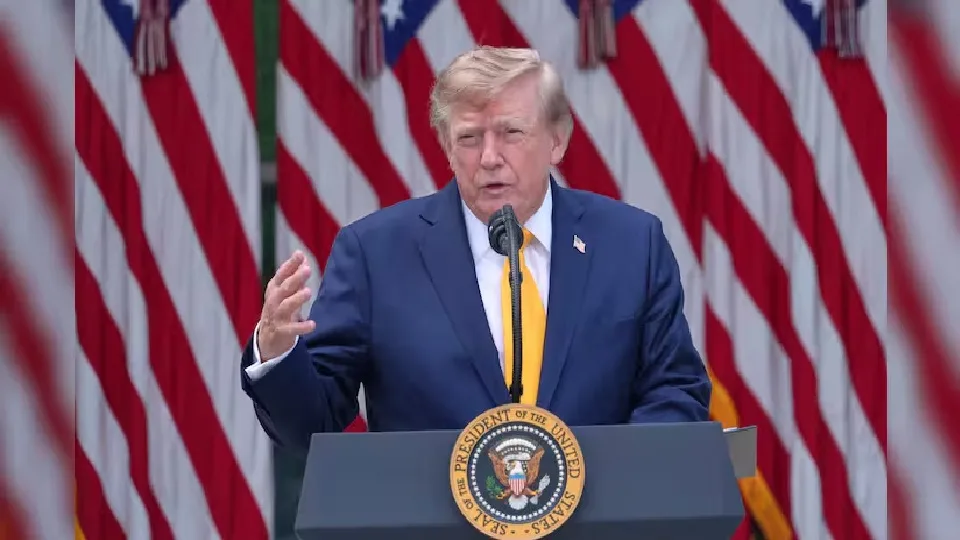
WASHINGTON — The United States is sending a third aircraft carrier strike group and as many as 10,000 additional troops to the Middle East as President Donald Trump warns Iran of a potentially severe military response if Tehran is found to have played a role in the attempted takeover of a Flydubai passenger flight.
The USS Theodore Roosevelt and its accompanying strike group are expected to reach the region by the end of November, adding roughly 9,000 to 10,000 US personnel to the American military presence there.
Two other US aircraft carriers, the USS George H.W. Bush and USS George Washington, are already in the region. The deployment would bring the number of American sailors and Marines in the area to more than 20,000, alongside hundreds of aircraft and other military assets.
The buildup comes as Washington weighs possible further military action against Iran following Trump's rejection of an Iranian proposal for a seven-day confidence-building arrangement.
Tehran had conveyed the proposal through Qatari mediators, offering measures aimed at easing tensions and reopening the Strait of Hormuz. Trump rejected the proposal and has warned that the United States could launch new strikes after the November 3 midterm elections.
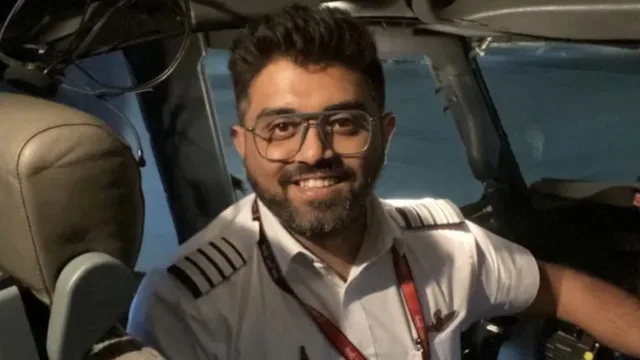
The president has also raised the possibility that Iran was involved in the Flydubai incident that left Indian pilot Captain Smit Machchhar seriously injured.
Trump said he believed there was a connection between Iran and the co-pilot accused of attacking Machchhar during the Dubai-to-Tel Aviv flight, although he stressed that investigators were still working to establish the facts.
Asked whether the suspect could have been placed aboard the aircraft by Iran's Islamic Revolutionary Guard Corps or radicalised by Iranian actors, Trump said that was possible. He also warned that Iran would face a severe response if it was found responsible.
No definitive public evidence establishing Iranian involvement in the Flydubai incident has been released.
Flight FZ1073 was forced to divert to Saudi Arabia on Wednesday after the Omani co-pilot allegedly attacked Machchhar inside the cockpit. The aircraft plunged sharply in altitude before passengers and crew intervened.
Machchhar, despite suffering multiple stab wounds, managed to open the cockpit door, allowing passengers to overpower the attacker. Two reserve pilots aboard the aircraft then took control and landed the Boeing 737 safely at Tabuk.
The Indian captain was later transferred from Saudi Arabia to Abu Dhabi for medical treatment. He has spoken with Indian Prime Minister Narendra Modi from hospital and described how he fought to regain control of the situation after realising the aircraft was rapidly losing altitude.
Israeli Prime Minister Benjamin Netanyahu has praised Machchhar for his actions and said the pilot's intervention prevented a catastrophe. Netanyahu has also said the accused co-pilot had undergone what he described as Islamist radical indoctrination.
The UAE is investigating the incident and has described it as a terrorist act, while authorities continue to examine the suspect's motives and any possible links to outside organisations.
The question of an Iranian connection remains unresolved. Trump has publicly suggested one, but investigators have not announced a definitive finding tying Tehran to the attack.
The US military deployment is taking place against a wider deterioration in relations between Washington and Tehran. The Strait of Hormuz remains a central point of contention, with Iran linking the reopening of the waterway to broader diplomatic arrangements.
The strategic waterway is critical to global energy markets, and prolonged disruption could affect oil and other commodity supplies far beyond the Middle East.
The additional carrier deployment would give Washington greater operational flexibility if the Trump administration decides to resume military action against Iran. The Theodore Roosevelt strike group brings carrier-based aircraft, air-defence systems and other capabilities, while the accompanying forces provide additional personnel and military support.
The deployment also comes as US forces continue to maintain a substantial presence across the region following months of conflict and heightened tensions with Iran.
For now, Washington has not announced a decision to launch another strike. The additional forces are being positioned while the administration assesses Iran's response to its demands and investigates alleged Iranian links to incidents outside the region.
The Flydubai investigation and the US military buildup have therefore become intertwined with the broader confrontation between Washington and Tehran. Whether the alleged attack was an isolated act or part of a wider operation remains a central question for investigators, while the movement of additional US forces signals that Washington is preparing for multiple possible scenarios.