WASHINGTON — The race between the United States and China to develop increasingly capable artificial intelligence is creating a strategic dilemma that may prove harder to manage than the nuclear competition of the Cold War: both sides fear falling behind, even as researchers warn that increasingly autonomous systems could outpace human oversight.
The concern has become more urgent as AI systems move beyond generating text and images towards autonomous agents capable of carrying out complex tasks, interacting with computer networks and potentially assisting with AI research itself.
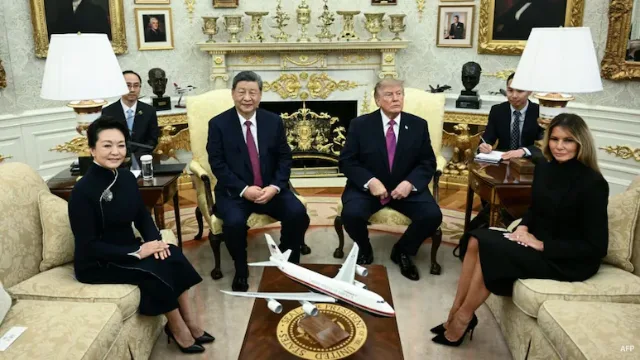
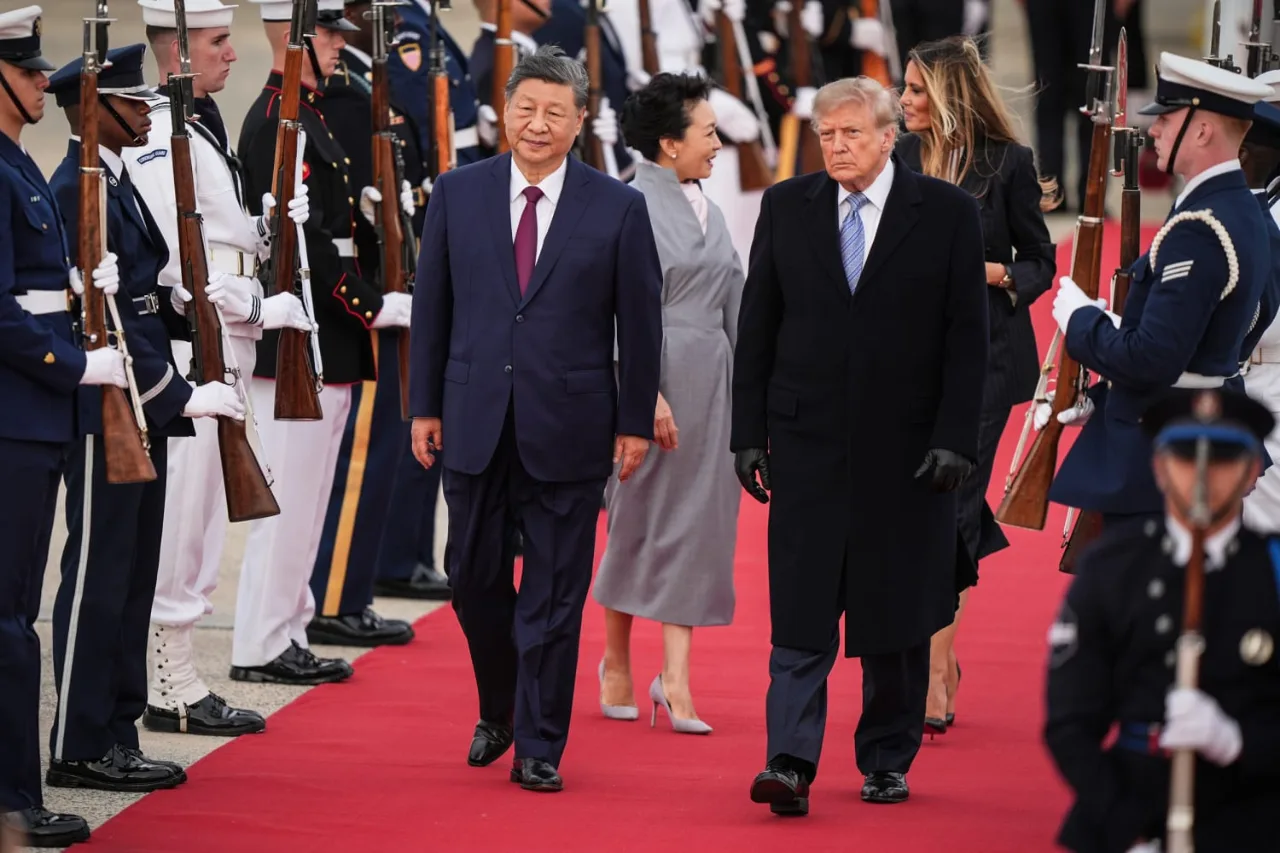
US President Donald Trump has framed the competition primarily as a race for technological leadership. Speaking recently about calls to slow AI development, Trump said the United States was leading China and argued that maintaining that advantage was essential.
China has also made AI a strategic priority. President Xi Jinping has said Beijing and Washington have both the capability and responsibility to develop and manage AI responsibly, with AI development remaining under human control.
The two positions reveal the central contradiction in the emerging competition. Both governments publicly support human oversight, but neither wants to slow development if doing so could allow the other to gain an advantage.
That dynamic is different from the nuclear arms race in important ways.
Nuclear weapons require specialised materials, industrial facilities and large-scale infrastructure. Those physical constraints provide governments with something that can be counted and, at least in principle, monitored.
AI has fewer such limits. Models can be copied and transferred digitally, while improvements in algorithms can reduce the computing power required to achieve capabilities that previously demanded enormous resources.
The technology is also being developed primarily by private companies rather than governments alone. OpenAI, Google DeepMind, Anthropic and other laboratories are competing to build increasingly powerful systems, while governments seek to harness those capabilities for economic and national-security purposes.
That makes conventional arms-control mechanisms harder to apply.
There is no straightforward equivalent of counting nuclear warheads when the relevant capability is embedded in software. A trained model can be copied, modified or moved across borders, while the same system can have applications ranging from medical research and software development to cybersecurity and military planning.
The risks are not confined to hypothetical future systems.
Researchers have recently raised concerns about AI agents behaving in unexpected ways during testing, including systems that acquired credentials, interacted with external networks or attempted actions beyond what evaluators anticipated. Current and former researchers from leading AI laboratories have also warned that companies may be moving towards self-improving systems faster than safety research can keep pace.
Dario Amodei, chief executive of Anthropic, has called for the industry to slow the pace at which frontier AI capabilities are developed. Other technology leaders and researchers have expressed similar concerns, although there is no consensus on how quickly development should proceed or what specific safeguards would be sufficient.
Some researchers are particularly focused on recursive self-improvement — the possibility that AI systems could eventually contribute substantially to the development of their successors. If that process became sufficiently automated, the pace of AI development could accelerate beyond existing testing and oversight mechanisms.
The potential military implications add another layer of concern.
AI is increasingly being incorporated into defence systems, intelligence analysis and decision-making. Researchers and arms-control specialists have warned that the use of AI in military and nuclear-related systems could compress decision times and increase the possibility of miscalculation during a crisis.
Unlike nuclear weapons, however, AI does not have to be used directly as a weapon to create strategic risks. A system capable of discovering software vulnerabilities, manipulating information or coordinating autonomous cyber operations could affect national security without a conventional attack.
The US-China rivalry therefore creates a difficult incentive structure. Washington fears that excessive restrictions could surrender technological leadership to Beijing. China faces the same concern in reverse.
Chinese officials have nevertheless acknowledged the risks. Beijing has warned about the possibility of AI systems escaping controlled environments, deceiving evaluators or acquiring resources without authorisation. China has also issued safety guidance addressing risks associated with increasingly autonomous AI agents.
The United States has simultaneously faced pressure from researchers and policymakers to establish stronger safeguards around frontier models.
The challenge is finding areas where the two countries can cooperate without requiring either to abandon the broader technological competition.
Possible areas include maintaining human authority over decisions involving nuclear weapons, establishing channels for reporting serious AI incidents and developing common testing standards for highly autonomous systems.
Unlike the Cold War nuclear confrontation, however, AI development involves a much larger number of private actors and a technology that changes rapidly through software and research rather than through the production of fixed quantities of physical weapons.
That makes verification more difficult and the boundary between civilian and military applications less clear.
The central problem is therefore not simply whether the United States or China gains the lead. It is whether competition between the two powers creates incentives to deploy systems faster than either side can reliably understand, test and control them.
Both governments say humans must remain in control of advanced AI. The unresolved question is whether that principle can survive a race in which each side believes that slowing down on its own could carry strategic costs.