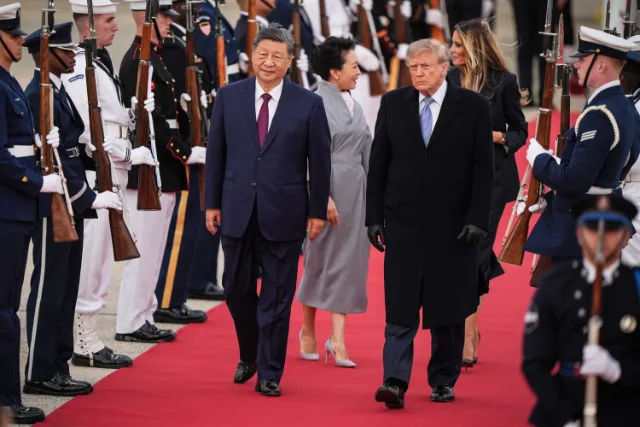
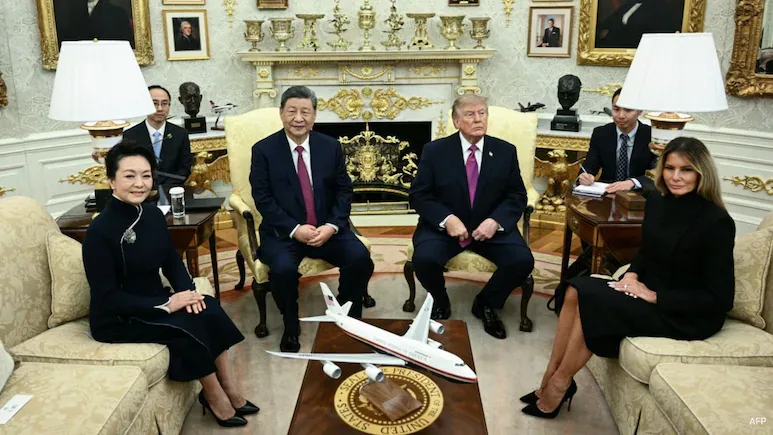
WASHINGTON — US President Donald Trump sought to play down Taiwan as a major source of tension with China after his latest meeting with President Xi Jinping, saying the two leaders spent little time discussing the issue and that Xi understood Washington’s position.
“We didn’t spend a lot of time talking about Taiwan,” Trump told reporters. “He understands very much how I feel.”
Trump and Xi met at the White House last week as Washington and Beijing sought to stabilise relations after months of disputes over trade, technology and other geopolitical issues. The meeting produced an extension of a US-China trade truce, while disagreements over Taiwan, artificial intelligence and Iran remained unresolved.
Taiwan remains one of the most sensitive issues in US-China relations. Beijing regards the self-governed island as part of China and has repeatedly demanded that Washington oppose Taiwanese independence and halt arms sales to Taipei.
Trump's comments came as Taiwan awaits US approval of a proposed arms package worth about $14 billion. The package has been delayed for months, adding uncertainty over how the Trump administration intends to balance its efforts to improve relations with Beijing against its longstanding security relationship with Taipei.
US Ambassador to China David Perdue said after the summit that Washington's Taiwan policy had not changed. He also said Trump had discussed arms sales with Xi and sought to frame US weapons exports as part of a broader global policy rather than an action directed specifically at China.
Taiwanese officials have sought to reassure the public that US support remains in place. Deputy Foreign Minister Chen Ming-chi said Washington understood Taiwan's defence requirements and the military pressure it faces from China.
The Trump-Xi meeting nevertheless highlighted the different priorities surrounding Taiwan.
Beijing has described the issue as a core interest and a red line. Chinese officials have pressed Washington to oppose any move towards formal Taiwanese independence and to reduce military support for the island.
Washington maintains a deliberately ambiguous position on whether it would intervene militarily if China attacked Taiwan. US policy also requires Washington to provide Taiwan with defensive capabilities, while stopping short of recognising the island as a sovereign state.
Trump has previously said he does not want to commit publicly to whether the United States would defend Taiwan in the event of a conflict. During earlier discussions with Xi, he said he had listened to the Chinese leader's position on Taiwan but had made no commitment on the issue.
The latest remarks suggest that Trump is seeking to prevent Taiwan from overshadowing broader efforts to stabilise US-China relations. Trade and economic issues have dominated much of the recent diplomatic engagement between the two countries.
The summit also covered artificial intelligence and Iran, areas where Washington and Beijing have competing interests but have continued to maintain high-level dialogue.
For Taiwan, however, the absence of detailed public discussion does not remove the underlying strategic uncertainty. China continues to oppose US arms sales to Taipei, while Taiwan remains dependent on American weapons and security cooperation to strengthen its defence capabilities.
Taipei is therefore watching closely for Washington's decision on the pending arms package. The timing and scope of any approval could provide a clearer indication of how the Trump administration intends to manage its competing objectives with Beijing.
For now, Trump has characterised Taiwan as an issue that did not dominate his latest meeting with Xi. Beijing's longstanding position on the island remains unchanged, while Washington has reiterated that its broader Taiwan policy has not been altered.