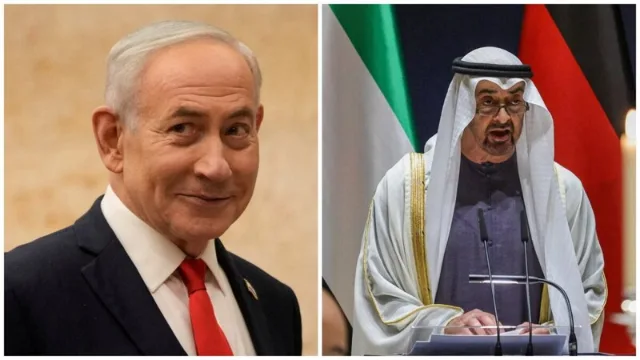
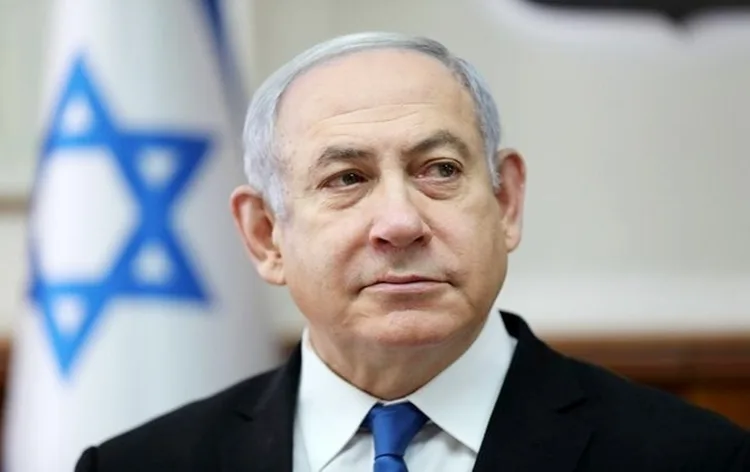
TEL AVIV — Israeli Prime Minister Benjamin Netanyahu has warned that whoever may have ordered the cockpit attack aboard a Flydubai flight bound for Tel Aviv will “pay a very heavy price”, as investigators examine whether the suspected attacker acted alone or was directed by an outside party.
Netanyahu said Friday that the investigation was beginning to clarify the circumstances surrounding the September 30 incident, in which an Omani co-pilot allegedly stabbed Indian Captain Smit Machchhar and attempted to take control of the aircraft.
“As time passes, the picture is becoming clearer,” Netanyahu said in a video message. He alleged that the attacker had undergone Islamist radicalisation and intended to bring down the aircraft with its passengers aboard.
“We are investigating whether he was sent, and whoever sent him will pay a very heavy price,” Netanyahu said.
The warning marked a shift in the Israeli government's public response to the incident. Netanyahu had initially described the episode as appearing to be a suicide attempt rather than a conventional hijacking and said the motive was unclear.
The aircraft, Flydubai Flight FZ1073, was travelling from Dubai to Tel Aviv with 174 people aboard when the confrontation erupted inside the cockpit. The plane subsequently lost altitude rapidly before passengers and crew intervened.
Machchhar was seriously injured during the attack but managed to open the cockpit door. Passengers entered the cockpit and helped overpower the co-pilot, while two off-duty Flydubai pilots travelling as passengers assisted in taking control of the aircraft.
The Boeing 737 eventually made an emergency landing in Tabuk, Saudi Arabia.
Machchhar later described the struggle to Indian Prime Minister Narendra Modi from his hospital in Abu Dhabi. He said he had collapsed after sustaining multiple injuries but realised that he had to get back up because the aircraft was descending and the passengers' lives were at risk.
The captain's actions have drawn praise from Indian, Israeli and Emirati officials.
The identity and background of the suspected attacker have become central to the investigation. Israeli officials have identified him as an Omani national. Netanyahu said investigators had found indications of Islamist radicalisation but did not publicly provide evidence supporting that assessment.
He also said the suspect had appeared suicidal after being subdued, citing reports that he repeatedly called on others to kill him.
The motive, however, remains unresolved. Authorities are investigating whether the co-pilot acted independently or was connected to an organisation or another party.
US President Donald Trump has separately suggested that there could be an Iranian connection to the incident, although no public evidence has established that Tehran was involved. Netanyahu has also said it is too early to determine whether Iran played any role.
The UAE is leading the broader investigation, with authorities examining the operational and security circumstances surrounding the flight. Israeli investigators are also involved.
The incident has raised questions about the security screening of foreign airline crews operating flights into Israel. Oman does not have diplomatic relations with Israel, and Israeli officials are examining how an Omani national was able to serve as a co-pilot on a flight bound for Tel Aviv.
Netanyahu has acknowledged that existing procedures contain a potential loophole concerning the screening of pilots from countries that do not maintain diplomatic relations with Israel.
Flydubai suspended flights to and from Israel following the incident while the investigation continued.
The attack has also triggered diplomatic and security repercussions involving Israel, the UAE and Saudi Arabia. The aircraft's emergency landing in Tabuk was particularly notable because Saudi Arabia does not have formal diplomatic relations with Israel.
For Netanyahu, the question now extends beyond the actions of the individual co-pilot. His latest warning indicates that Israel is examining the possibility of an organised operation and could respond if investigators establish that the attacker was acting under external direction.
No such connection has yet been conclusively established.
The investigation therefore remains focused on two central questions: why the co-pilot attacked Machchhar and whether anyone else was behind the assault. Netanyahu's warning makes clear that any evidence of outside involvement could significantly widen the consequences of the incident.