
Pakistan Records 1,232 Militant Attacks in Nine Months as Security Crisis Deepens
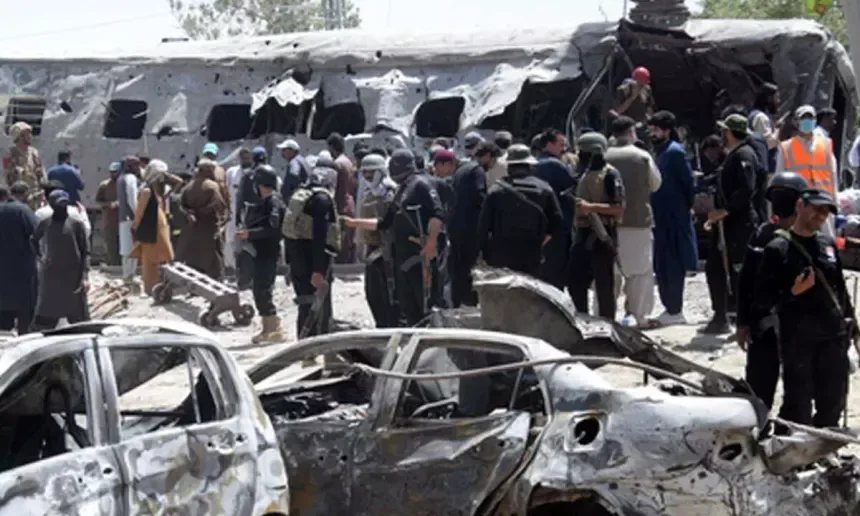
ISLAMABAD — Pakistan recorded 1,232 militant attacks during the first nine months of 2026, with violence reaching a 12-year high in September as armed groups intensified operations across Balochistan, Khyber Pakhtunkhwa and the former tribal districts.
September alone saw 225 militant attacks, the highest monthly total recorded in Pakistan in 12 years. The figure was 13 percent higher than the 199 attacks reported in August and represented the third consecutive monthly increase.
The escalation has placed further pressure on Pakistan's security forces as they confront separate insurgencies and militant networks operating in the country's western provinces.
Data compiled by the Pakistan Institute for Conflict and Security Studies showed that the September attacks killed 259 people and injured 242. When deaths from militant attacks and security-force operations are combined, the monthly toll rose to 545, including 103 security personnel, 81 civilians, 346 militants and 15 members of peace committees.
Across the first nine months of the year, militant violence and security operations resulted in 3,629 deaths, according to the institute. The toll included 2,428 militants, 591 security personnel, 550 civilians and 60 members of peace committees.
The number of attacks during the January-September period was 52 percent higher than during the same period last year, while the combined death toll from militant attacks and security operations increased by 51 percent.
Balochistan remained the main centre of violence in September, accounting for 131 attacks. Khyber Pakhtunkhwa recorded 58, while the former Federally Administered Tribal Areas accounted for another 34.
The pattern reflects the increasingly fragmented nature of Pakistan's security challenge. Militants linked to the Tehrik-e-Taliban Pakistan have remained active primarily in Khyber Pakhtunkhwa and the former tribal areas, while Baloch separatist groups have carried out attacks in Balochistan.
Among the groups identified in recent attacks are the TTP, Baloch Liberation Army and Baloch Liberation Front. An alliance known as Ittehad Mujahideen Pakistan has also emerged as a security concern, bringing together several militant factions.
The increase has included attacks against police, military personnel and other state institutions. Security forces have also continued large-scale operations against militant networks, resulting in significant militant casualties.
Recent attacks have demonstrated the continuing ability of armed groups to carry out coordinated and high-casualty operations. In Khyber Pakhtunkhwa, suicide attacks and assaults on security installations have killed and wounded large numbers of personnel.
The deteriorating security environment has also aggravated Pakistan's already strained relationship with Afghanistan.
Islamabad has repeatedly accused Afghanistan's Taliban authorities of allowing TTP members to maintain bases and operate from Afghan territory. Kabul has denied the allegations, rejecting claims that Afghan territory is being used to conduct attacks against Pakistan.
The dispute has contributed to worsening relations along the two countries' shared border, with Pakistan carrying out military operations and airstrikes against suspected militant positions and Afghanistan objecting to violations of its territory.
Balochistan presents a different challenge. The province has long experienced an armed separatist insurgency, with militant groups targeting security forces, government installations, infrastructure and economic projects.
The concentration of attacks in Balochistan and Khyber Pakhtunkhwa means that much of the violence remains geographically concentrated rather than evenly distributed across Pakistan.
The September figures also point to a shift in the frequency of militant activity. While August had already recorded a sharp increase in incidents, September's 225 attacks represented another substantial rise and the highest monthly figure in more than a decade.
The growing number of attacks comes despite an extensive counterterrorism campaign. Pakistan's military has reported tens of thousands of intelligence-based operations during 2026, alongside large numbers of militant arrests and deaths.
The government's security campaign has therefore failed to prevent an increase in the overall frequency of attacks, even as security forces continue to inflict substantial losses on militant organisations.
The worsening situation is also imposing costs on civilians in affected areas. Repeated attacks, military operations and insecurity have disrupted transport, commerce and everyday life, particularly in districts close to the Afghan border and in parts of Balochistan.
The September figures provide the latest indication that Pakistan's militant violence has entered a sustained period of escalation. With attacks rising for a third consecutive month and relations with Afghanistan deteriorating, the security challenge is increasingly spread across multiple fronts.
For Islamabad, the immediate task remains containing armed groups while preventing the violence from widening further across the country.