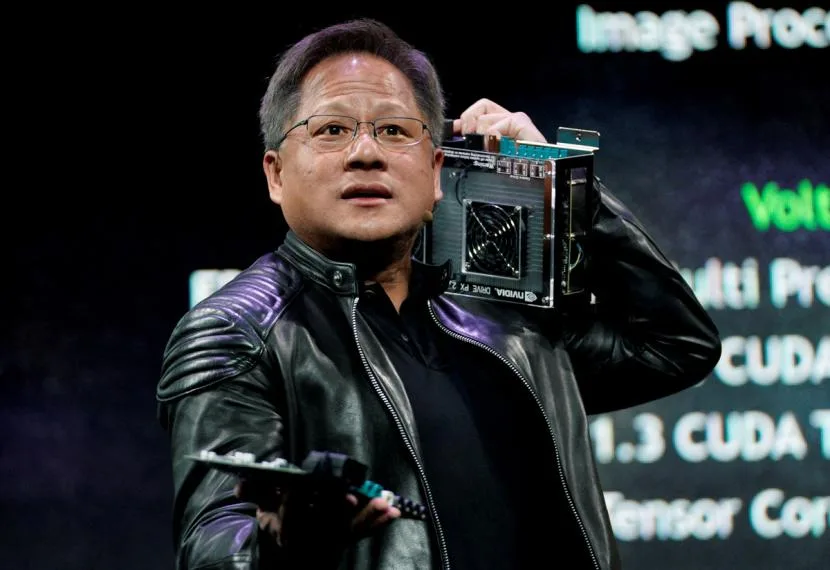
Nvidia has ruled out reinstating Jensen Huang as chief executive, rejecting the former CEO’s offer to return just hours after he publicly signalled his willingness to resume leadership of the artificial intelligence chipmaker.
Chairman Harvey Jones announced the board’s position during the company’s quarterly earnings call on Tuesday, saying directors had unanimously accepted Huang’s resignation and did not intend to reinstate him. The statement effectively closed the door, for now, on a potential comeback that had attracted support from prominent figures in the technology industry and US President Donald Trump.
Huang, who stepped down last week, made his first public comments since leaving the company earlier on Tuesday. In a social media post, he said he had received an outpouring of calls from employees, investors, business partners and customers urging him to return. He added that he would be honoured to resume the role if the board concluded that his return would serve the interests of shareholders, employees, Nvidia and the United States.
He also acknowledged making what he described as serious mistakes in his personal life.
Huang’s departure followed disclosures about extramarital relationships, including an alleged relationship with a Chinese businesswoman suspected by US authorities of having links to Beijing’s intelligence services. The allegations have raised wider questions about potential national security implications, particularly given Nvidia’s central role in supplying advanced chips used in artificial intelligence systems.
The businesswoman was reportedly associated with Singapore-based cloud computing firm Megaspeed International, which is under investigation in the United States over allegations that advanced Nvidia chips were diverted to Chinese companies in violation of export controls. The allegations have not, by themselves, established that Huang or Nvidia knowingly facilitated any unlawful transfer.
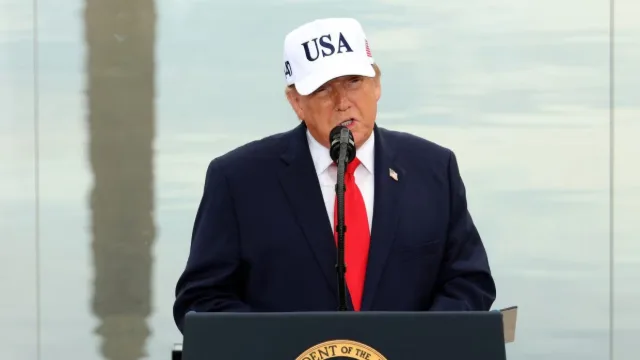
The controversy has also drawn political attention in Washington. Trump has expressed support for Huang’s possible return, while other senior figures in the administration have taken a more critical position. Several technology executives, including Elon Musk, have also backed calls for Nvidia to reconsider the decision.
The board, however, appears determined to proceed with a leadership transition. Chief Financial Officer Colette Kress is serving as interim CEO while the company searches for a permanent successor. Jones said Nvidia wanted to appoint a permanent chief executive as quickly as possible but would not rush the process before identifying the right candidate. The search is expected to consider both internal and external candidates.
The leadership upheaval comes as Nvidia continues to report strong financial performance. The company recorded more than $116 billion in revenue for its latest quarter, roughly double the figure from a year earlier, while earnings per share reached $2.70, exceeding analysts’ expectations. Its data-centre business, a key driver of demand for advanced AI processors, generated $107.6 billion in revenue.
Nvidia has also announced the creation of a new board committee to oversee national security and global trade compliance, signalling a stronger focus on regulatory oversight as scrutiny of its international chip sales intensifies.
Huang is expected to appear before US congressional committees on December 1, with Nvidia General Counsel Tim Teter scheduled to testify the following day. Lawmakers have said they want answers about the company’s role in the possible diversion of advanced chips to Chinese entities and the allegations involving a potential Chinese intelligence connection.
For Nvidia, the immediate challenge is to separate its corporate performance from the controversy surrounding its former chief executive. The company’s latest results demonstrate that demand for its AI infrastructure remains strong. But the board’s refusal to reinstate Huang makes clear that it is prioritising governance, regulatory confidence and leadership continuity over a