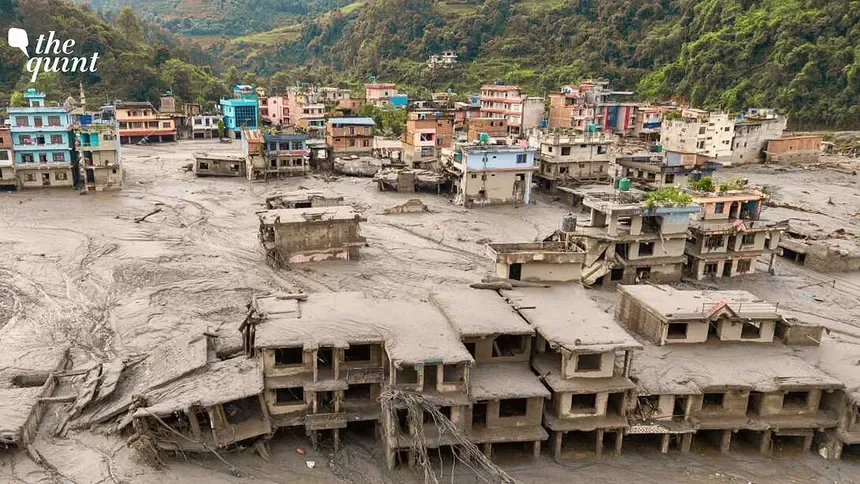
KATHMANDU — At least 21 people have died and five remain missing after four days of torrential rain triggered floods and landslides across Nepal, damaging hundreds of homes, blocking major highways and forcing about 3,000 people to evacuate from high-risk areas.
The National Disaster Risk Reduction and Management Authority said 14 of the deaths were caused by landslides, while floods accounted for four and continuous heavy rain for three. Five people were injured in the disasters between September 24 and 27.
The latest emergency has struck several parts of Nepal as rivers rose rapidly and landslides cut off roads and threatened settlements. The Narayani River in central Nepal crossed the nine-metre danger level on Sunday morning, entering populated areas and prompting authorities to warn communities in low-lying locations.
Several major roads leading to Chitwan, an important transport junction connecting different parts of the country, remained blocked by landslides. In mountainous districts, damaged roads and unstable terrain have complicated rescue operations.
Baglung district was among the worst affected. A landslide in Nishikhola village buried a house on Sunday, killing four people, while the Kaligandaki River swept away homes and bridges and disrupted road connections in parts of the district.
The wider disaster has affected 247 families, according to NDRRMA. At least 260 homes were completely destroyed and another 80 suffered partial damage.
Authorities have deployed security personnel and emergency teams to affected areas. Helicopters have been used to evacuate people trapped in remote locations, including in Jajarkot, Myagdi and Sankhuwasabha.
The heavy rainfall was associated with a low-pressure system originating in the Bay of Bengal. NDRRMA monitoring stations recorded more than 100 millimetres of rain at 106 locations during the four-day period.
Dumkuali in Nawalparasi recorded the highest rainfall, at 455.2mm. Pokhara received 407.2mm, while Anbu Khaireni in Tanahun recorded 373.2mm.
The authorities have also warned of a potentially dangerous secondary threat after landslides obstructed the flow of major rivers.
A landslide in Chame, the administrative centre of Manang district, blocked part of the Marsyangdi River, while another landslide in Mustang partially obstructed the Kali Gandaki. Authorities warned communities downstream that accumulated water could be released suddenly if the natural blockages collapse.
The Central Monsoon Response Command Centre has ordered restrictions on vehicle movement along vulnerable road sections, while schools have been closed in some affected districts. More than 5,000 direct alerts were sent to field responders, and the Flood Forecasting Division issued more than 814,000 warnings to people living in downstream flood-risk areas.
The severe weather has also disrupted tourism, an important part of Nepal's economy. NDRRMA estimated that about 9,000 foreign tourists and trekkers were in the country during the period of heavy rainfall. Authorities and trekking agencies issued safety advisories urging visitors in exposed areas to suspend travel and move to safer locations.
The rain-related emergency has coincided with a separate disaster in the high-altitude Manang region, where an avalanche at the base camp of Himlung Himal killed at least two people. Heavy snowfall had already forced climbers to abandon some autumn expeditions, while difficult terrain and additional permit requirements for helicopter operations have complicated rescue efforts.
Nepal was still dealing with the consequences of another major disaster in August, when flooding along the Bhotekoshi River caused extensive damage across several districts. That disaster destroyed infrastructure, damaged hydropower facilities and severely disrupted road links.
The latest rainfall has renewed concerns over Nepal's vulnerability to floods, landslides and other cascading disasters in its mountainous terrain.
Prime Minister Balen Shah recently highlighted those risks during his address to the United Nations General Assembly, pointing to changes in the Himalayan environment and the growing dangers posed by unstable mountain slopes, avalanches and floods.
For now, authorities remain focused on rescue operations, restoring road connections and monitoring rivers and landslide-prone areas as further rainfall threatens to worsen conditions in already affected communities.