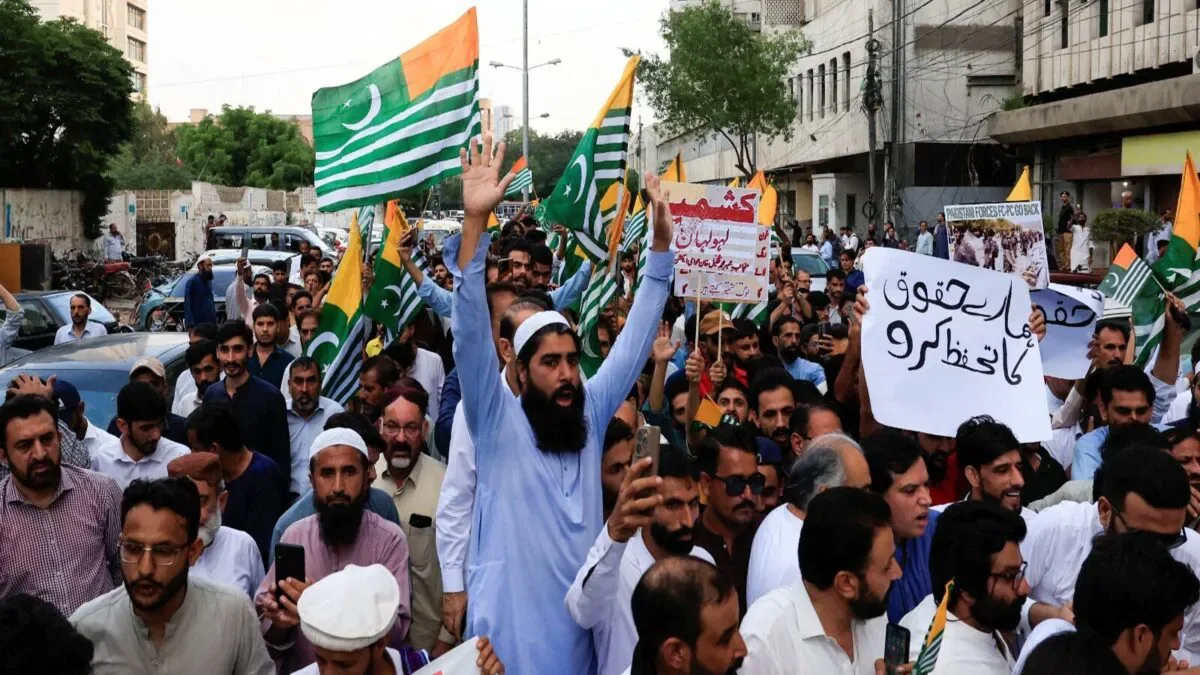
Members of the Kashmiri diaspora staged protests across Britain, condemning Pakistan's handling of unrest in Pakistan-occupied Jammu and Kashmir (PoJK) and drawing international attention to allegations of political repression, restrictions on civil liberties and the use of force against demonstrators.
The demonstrations reflect growing discontent among sections of the Kashmiri diaspora over Islamabad's administration of the region. Protesters sought to highlight the grievances of residents in PoJK, challenging Pakistan's claim to represent the political aspirations of Kashmiris while raising questions about governance, accountability and the treatment of local communities.
The protests also underline how domestic grievances in PoJK are increasingly finding an international platform. Members of the diaspora have used demonstrations in Britain to bring attention to demands for political representation, economic justice and protection of fundamental rights.
Unrest in PoJK has been fuelled by public dissatisfaction over electricity tariffs, rising prices, resource distribution and political representation. The Joint Awami Action Committee (JAAC) has emerged as a prominent platform for these grievances, mobilising residents around demands for economic relief and administrative reforms.
The authorities' response has attracted criticism, with allegations of excessive force, arrests, communications restrictions and intimidation during protests. Reports of civilian casualties during clashes have further intensified concerns over the handling of dissent.
The demonstrations in Britain add an important international dimension to these developments. Britain's substantial Kashmiri-origin population and historical connections with the region have made it a significant platform for raising concerns about conditions in PoJK.
The protests also expose a contradiction in Pakistan's international messaging on Kashmir. While Islamabad frequently invokes political rights and self-determination in its advocacy over the wider Kashmir dispute, demonstrators are drawing attention to demands for similar rights, accountability and political participation within the territory under its own administration.
For Pakistan, the growing visibility of these protests presents a challenge beyond managing domestic opposition. The concerns being expressed by sections of the diaspora indicate that dissatisfaction with governance in PoJK is reaching international audiences and generating demands for greater scrutiny.
Addressing these grievances will require more than security measures or temporary concessions. Meaningful dialogue, transparent investigations into allegations of excessive force and credible political representation remain essential to restoring public confidence.
The demonstrations across Britain have reinforced a wider message: the people of Pakistan-occupied Jammu and Kashmir must have the opportunity to articulate their own political and economic aspirations, without their concerns being overshadowed by competing geopolitical narratives.