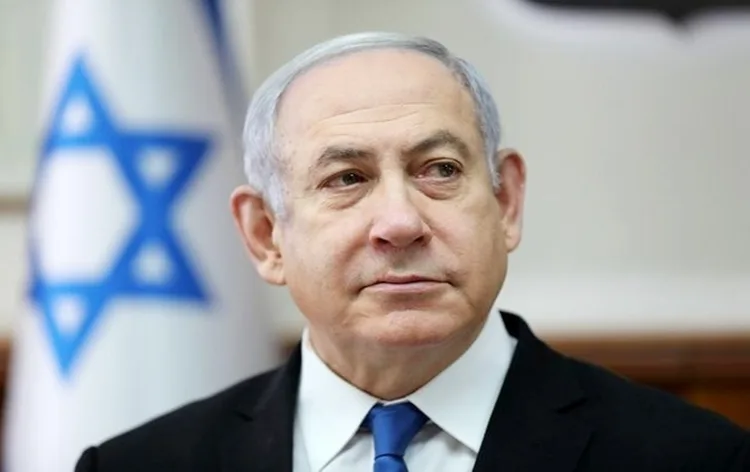
Israel’s October 27 election will test Benjamin Netanyahu’s political survival, but the deeper question is whether the country is prepared to confront the failures, divisions and unresolved choices that have defined its recent years. A change of prime minister could alter the political atmosphere in Jerusalem. It will not, by itself, resolve the contradictions shaping Israeli society or transform the country’s approach to its most difficult chall
The election is the first since Hamas’s October 7, 2023, attack shattered Israel’s longstanding assumptions about its security. For Netanyahu, whose political identity has been built around strength, deterrence and national security, the attack remains an extraordinary challenge to his central claim to leadership. His supporters continue to regard him as an experienced leader operating in a hostile region. His opponents argue that experience cannot excuse a failure of this magnitude or eliminate the need for accountability.
That makes the vote a referendum on more than personality. It is a judgment on the relationship between political power and responsibility in a country where security has long dominated public life.
Netanyahu’s opponents face a demanding task. They must persuade voters that a different leadership can restore confidence without appearing to weaken Israel’s security posture. Former military chief Gadi Eisenkot, former prime minister Naftali Bennett and other opposition figures bring different political backgrounds, but their challenge is to turn dissatisfaction with Netanyahu into a coherent governing alternative.
The opposition’s opportunity is real, but so are its limitations. Israel’s proportional electoral system means that no single party is expected to secure a parliamentary majority. A government requires at least 61 of the Knesset’s 120 seats, making coalition negotiations as consequential as the vote itself. A party can finish first and still fail to form a government. Smaller factions can gain considerable influence by deciding which bloc reaches the required majority.
This system makes Israeli elections both representative and vulnerable to prolonged political deadlock. Coalition partners often bring narrow demands into negotiations, and the prime minister’s freedom to govern can depend on satisfying parties whose electoral strength is modest but whose parliamentary support is indispensable.
For Netanyahu, the arithmetic may determine whether he remains in office. For Israel, it will determine whether the next government can act decisively on issues that have become increasingly difficult to postpone.
One of those issues is accountability for October 7. The attack raised fundamental questions about intelligence assessments, military preparedness and the government’s handling of warnings before the assault. These questions cannot be settled by campaign slogans or by replacing one political leader with another. They require a credible examination of what went wrong, who bears responsibility and what institutional changes are necessary to reduce the risk of another failure.
Accountability should not be treated as a concession to political opponents. It is a requirement of national security. A country that places such importance on intelligence, military readiness and deterrence cannot afford to turn the examination of a major security failure into a partisan contest over blame.
The next government will also inherit a society under strain. The question of compulsory military service for ultra-Orthodox Jewish men has become particularly contentious. Exemptions that once helped sustain political coalitions are increasingly difficult to defend amid prolonged military operations, repeated reserve mobilisation and demands for a more equitable distribution of national obligations.
The dispute is not simply between religious and secular communities. It concerns the terms on which citizens share the burdens of national defence. A government that cannot find a workable answer risks deepening resentment among those who serve while weakening the social consensus on which sustained military readiness depends.
Economic pressures add another dimension. The costs of prolonged conflict, living expenses and the demands placed on reservists and their families have made the question of national priorities more immediate. Security remains central to Israeli politics, but it does not eliminate the need for effective governance, economic stability and public services. Voters must judge whether their leaders can manage these competing demands rather than continually subordinating them to the next emergency.
Yet the election’s implications for Palestinians remain uncertain. Israel’s political debate is heavily shaped by security, and the principal Jewish-led parties have not made the establishment of a Palestinian state a central electoral priority. A new government could change the tone of Israel’s relations with international partners or the way it manages the conflict. That does not automatically mean a fundamental change in policy towards Gaza, the occupied West Bank or Palestinian statehood.
This distinction matters. Netanyahu’s departure, if it occurs, would not by itself settle the conflict or remove the political and ideological barriers to a negotiated settlement. The composition of the coalition, the influence of smaller parties and the public’s own political preferences will all constrain the next government. Any assessment of change must therefore be based on decisions and policies, not simply on the identity of the person occupying the prime minister’s office.
Israel’s international standing is another test. The wars that followed October 7 have intensified scrutiny of its military conduct and its strategic choices. A new administration may seek to repair strained relationships, but diplomatic rehabilitation cannot rest on messaging alone. It will depend on the government’s conduct, its willingness to address legitimate concerns and its ability to reconcile security objectives with wider political consequences.
The central danger for Israel is to mistake a leadership contest for a national reckoning. Netanyahu has become the most visible symbol of the country’s political divisions, but the problems confronting Israel are not confined to one individual. They include institutional accountability, unequal civic obligations, social polarisation and the absence of a broadly accepted political direction for the conflict with the Palestinians.
If Netanyahu loses power, his departure could open space for a different approach. If he survives, the result would give him another mandate to govern, but would not erase the questions raised by October 7. In either case, the country will still have to confront the issues that have brought it to this election.
The decisive measure of Israel’s next government will not be whether it can claim victory over its political rivals. It will be whether it can restore public confidence, make national obligations more equitable and take responsibility for difficult choices. The election may decide Netanyahu’s future. Whether it marks a turning point for Israel will depend on what the country’s leaders do after the votes are counted.