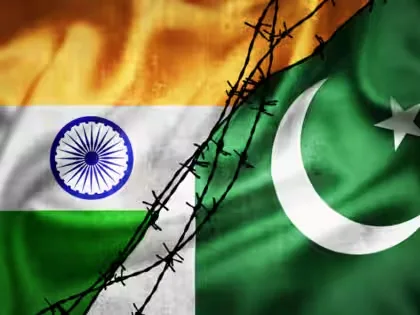
India has accused Pakistan of undermining judicial independence, restricting civil liberties and allowing the military to exercise decisive influence over governance, telling the United Nations that a country where “Army is the rule, and Army is the law” cannot credibly lecture others on the rule of law.
R. Mythili, counsellor at India’s Permanent Mission to the UN, delivered the remarks during a discussion in the United Nations General Assembly’s Sixth Committee on the rule of law at national and international levels. India exercised its right of reply after Pakistan made comments during the debate.
“It is ironic to hear lectures on rule of law from a nation whose own record makes a mockery of it,” Mythili said, challenging Islamabad’s criticism of India and pointing to what New Delhi described as shortcomings in Pakistan’s own institutions.
She argued that Pakistan’s military exercises substantial influence over the country’s political and legal systems, placing questions over accountability and the independence of civilian institutions at the centre of India’s response.
“A state that places its military rulers beyond the reach of its own courts is in no position to lecture on the rule of law in this committee,” she said.
India also criticised Pakistan’s 26th Constitutional Amendment, arguing that changes to the country’s judicial framework had weakened judicial independence. The amendment introduced significant changes to judicial appointments and the functioning of the courts, becoming a focus of debate over the separation of powers and the autonomy of the judiciary.
Mythili cited the imprisonment of former prime minister Imran Khan as another example of what India described as Pakistan’s inconsistent commitment to the rule of law. She questioned the circumstances surrounding his continued detention and raised concerns over access to medical treatment, referring to a Supreme Court direction that she said had not been followed.
Khan, who was removed from office in 2022 and imprisoned in 2023, faces multiple criminal cases. He denies wrongdoing, while his Pakistan Tehreek-e-Insaf party maintains that the legal proceedings are politically motivated. Pakistani authorities have rejected the broader allegations of political persecution.
India’s statement also accused Pakistan of restricting political competition, prosecuting civilians in military courts, pressuring Supreme Court judges and suppressing human rights. The remarks formed part of a wider challenge to Islamabad’s claims on democratic governance and institutional accountability.
The exchange extended to minority rights and freedom of the press. Pakistan has repeatedly raised concerns about the treatment of religious minorities in India, allegations New Delhi has contested. Mythili dismissed Islamabad’s criticism as a diversion from its own record, arguing that Pakistan had failed to protect minority communities adequately.
She pointed to the declining proportion of religious minorities in Pakistan’s population since the country’s creation, presenting the issue as a challenge to Islamabad’s claims about its commitment to equal rights. The demographic comparison, however, reflects changes over a long historical period and encompasses factors that require separate examination.
India also criticised Pakistan’s new Foreign Media Facilitation Guidelines, which require foreign journalists to obtain a no-objection certificate for assignments outside Islamabad, Lahore and Karachi. Mythili questioned the implications of the restrictions for independent reporting and press freedom.
The remarks came amid a broader diplomatic confrontation between the two countries at the United Nations, where exchanges over Kashmir, terrorism, human rights and military influence have repeatedly strained proceedings. Both governments have used the international forum to challenge each other’s political and security policies.
Mythili also defended India’s Operation Sindoor, launched in May 2025 against what New Delhi described as terrorist infrastructure in Pakistan and Pakistan-occupied Kashmir following the Pahalgam terror attack. She characterised the operation as a “measured, proportionate, and focused response” to the attack.
Her remarks included a pointed response to Pakistan’s portrayal of the military outcome. “As far as the result of the same is concerned, if bombed airfields and destroyed hangars are victory, they are welcome to enjoy it,” she said.
India argued that repeated allegations against it would not resolve Pakistan’s domestic governance problems. Mythili urged the Pakistani delegation to address the expectations of its own population rather than repeatedly directing criticism at New Delhi.
The exchange did not produce any formal resolution, but it highlighted the continuing dispute over how the two countries define democratic accountability, judicial independence and human rights. For India, Pakistan’s civil-military relations and restrictions on political and media freedoms remain central to its criticism of Islamabad’s interventions at the UN.