The European Parliament’s latest position on Taiwan reflects a growing recognition in Europe that economic engagement with China cannot come at the expense of political autonomy, regional stability and the right of democratic societies to maintain international partnerships. By rejecting Beijing’s efforts to restrict Taiwan’s participation in international organisations and calling for stronger EU–Taiwan cooperation, European lawmakers have placed an important question at the centre of their China policy: how far should Europe accommodate Chinese pressure?
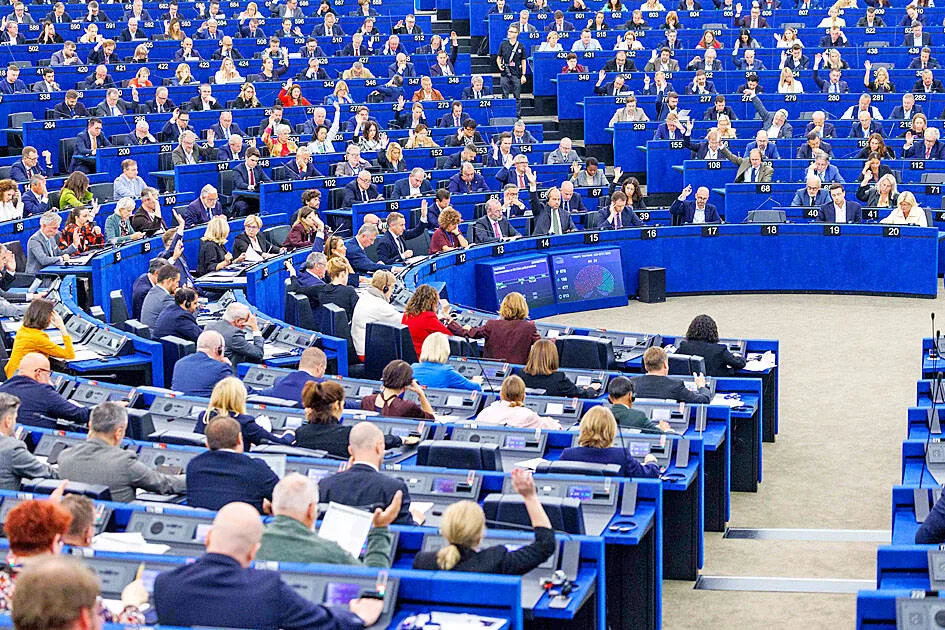
On October 7, 2026, the European Parliament adopted a recommendation on EU–China political relations by 454 votes to 86, with 110 abstentions. The document called for closer economic, technological and security cooperation with Taiwan, while opposing attempts to alter the status quo across the Taiwan Strait through force or coercion.
The recommendation is significant because it goes beyond expressions of diplomatic support. It identifies specific areas in which Europe should deepen engagement with Taipei, including semiconductors, cybersecurity, critical supply chains and security coordination. It also urges the European Commission to prepare for negotiations on a bilateral investment agreement or an alternative arrangement covering critical supply chains.
At the heart of the dispute is Beijing’s insistence that Taiwan's international engagement must remain subject to its interpretation of the One China principle. China considers Taiwan part of its territory and opposes official international recognition of the island. Taiwan, meanwhile, maintains its own elected government, institutions and democratic political system.
The European Union follows its own longstanding One China policy, but the parliamentary recommendation makes an important distinction: the EU has not endorsed Beijing's One China principle. This distinction allows European institutions to maintain their diplomatic framework with China while supporting practical cooperation with Taiwan.
That distinction matters because Beijing has increasingly sought to influence how international organisations, governments and other institutions engage with Taipei. The European Parliament specifically referred to Chinese pressure surrounding Taiwan Vice President Hsiao Bi-khim’s participation in a European Parliament-organised conference on freedom and democracy in Italy in September.
The episode illustrates the difficulty democratic institutions face when external pressure is applied to restrict the participation of elected representatives. A government may oppose another political entity's international status, but that disagreement does not automatically give it authority over the activities of independent parliamentary institutions or third countries.
The recommendation also criticised what it described as Chinese transnational repression. It referred to the investigation of Taiwanese legislator Puma Shen under a 2024 Chinese judicial guideline accusing him of promoting separatism through the civilian defence organisation Kuma Academy. The case raises wider concerns about the extraterritorial application of Chinese legal claims against individuals and organisations operating outside its jurisdiction.
Europe's response is particularly relevant because the continent has its own experience of political coercion and external interference. The European Parliament's call for stronger security coordination with democratic partners in the Indo-Pacific, including a continuous naval presence and joint exercises, reflects an understanding that stability in the Taiwan Strait is not merely an Asian concern.
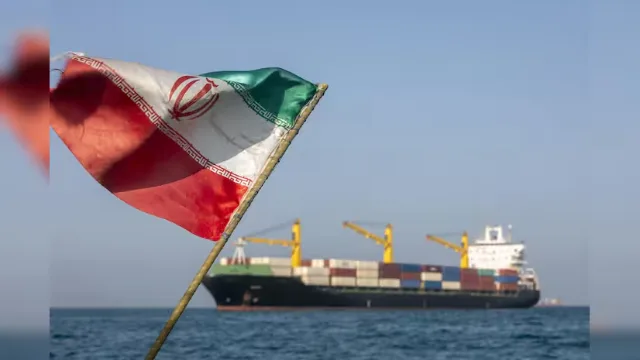
The Taiwan Strait is one of the world's most important maritime and commercial corridors. Any serious disruption would have consequences for international shipping, manufacturing and technology supply chains. Taiwan's central role in semiconductor production makes the security of the island particularly important to economies that depend on advanced chips for electronics, telecommunications, automotive manufacturing and defence systems.
For Europe, deeper engagement with Taiwan is therefore both a political and an economic consideration. Greater cooperation in semiconductor technology and cybersecurity could help diversify supply chains and reduce vulnerabilities arising from excessive dependence on a limited number of suppliers. A proposed investment agreement would also provide a framework for expanding commercial engagement.
The issue of United Nations General Assembly Resolution 2758 has emerged as another important point of disagreement. Adopted in 1971, the resolution addressed China's representation at the United Nations and recognised the representatives of the People's Republic of China as the only legitimate representatives of China to the organisation. It does not explicitly mention Taiwan. Beijing interprets the resolution as supporting its position on Taiwan, while the European Parliament rejects attempts to use it as a basis for restricting the island's international participation.
The distinction between China's representation at the United Nations and Taiwan's international status remains central to this debate. The parliamentary recommendation calls on the United Nations to reconsider restrictions affecting holders of Republic of China passports, including tourists, journalists, civil society representatives and political activists seeking access to UN events and facilities.
Yet the European Parliament's position should not be mistaken for a formal recognition of Taiwan as an independent state or a change in the EU's diplomatic policy. The recommendation is directed towards the European Council, the European Commission and the EU's foreign policy leadership. Its significance lies in the political direction it seeks to establish, rather than an immediate alteration of diplomatic arrangements.
The challenge for European governments will be translating parliamentary recommendations into a consistent policy. The EU has substantial economic relations with China, and member states differ in their commercial interests and strategic assessments. Beijing remains an important trading partner, while European businesses have significant exposure to the Chinese market. This creates competing pressures whenever the EU considers measures that could affect relations with Beijing.
However, economic interdependence cannot become a justification for accepting political coercion. Europe's ability to maintain independent foreign relations depends on its willingness to defend the autonomy of its institutions and partners. If pressure against Taiwan's international participation is accepted without challenge, the principle that sovereign governments and independent institutions should make their own decisions becomes increasingly difficult to defend.
For India and other Indo-Pacific countries, the European Parliament's position also carries wider significance. Regional security is closely connected to international trade, maritime access and the resilience of critical supply chains. India has a direct interest in a stable Indo-Pacific and has expanded its engagement with Taiwan in areas including trade, investment, technology and education, while maintaining its own diplomatic position on the Taiwan question.
The European debate demonstrates that Taiwan is no longer viewed solely through the narrow framework of cross-strait relations. Its economic importance, technological capabilities and strategic location have made the island a significant consideration in the policies of countries far beyond East Asia.
Beijing may continue to oppose closer international engagement with Taipei, but pressure cannot resolve the underlying political disagreement. Nor can economic influence guarantee that other governments will accept restrictions on their independent diplomatic and institutional choices.
The European Parliament's recommendation does not settle Taiwan's international status or remove the risk of tensions across the Strait. It does, however, establish a clear parliamentary position against coercion and in favour of deeper practical cooperation. The next test will be whether European institutions and member states translate that position into sustained engagement.
Europe faces a choice between allowing its Taiwan policy to be shaped primarily by the limits Beijing seeks to impose and developing a relationship that protects its own economic and strategic interests. The recommendation suggests that a growing number of European lawmakers favour the latter approach. In an increasingly contested Indo-Pacific, maintaining that independence will matter not only to Taiwan but also to the credibility of Europe's wider foreign policy.