The future of Tibetan Buddhism is approaching a defining moment. As the 14th Dalai Lama advances in age, the question of who will succeed him has become a point of growing contention between Tibetan religious institutions and the Chinese government. At the same time, reported attacks against the Dalai Lama’s representative in South Africa have raised concerns about the security of Tibetan institutions operating outside their homeland.
These developments may appear separate, but they expose a common challenge: the ability of Tibetan religious institutions to preserve their independence in the face of political pressure.
At the centre of the succession dispute is a fundamental disagreement over who has the authority to identify the next Dalai Lama. For Tibetan Buddhist tradition, reincarnation is a religious process governed by established spiritual practices and the recognition of senior religious authorities. Beijing, however, maintains that the selection of reincarnated Tibetan Buddhist leaders must comply with Chinese laws, regulations and historical procedures.
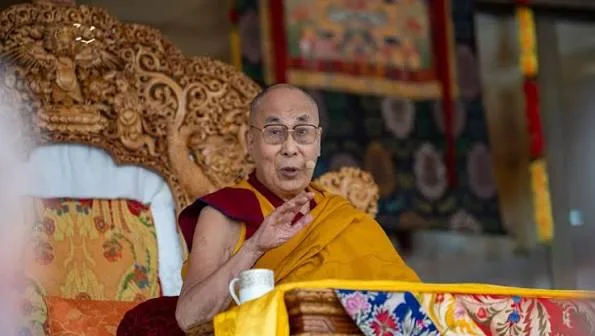
The Dalai Lama addressed the question directly in July 2025, confirming that the institution would continue after his death. He stated that the Gaden Phodrang Trust, established by him, would hold the authority to oversee the search and recognition of his successor in accordance with Tibetan Buddhist tradition. His announcement followed consultations with senior Buddhist leaders and institutions.
The declaration was significant because it sought to establish an institutional process for succession rather than leave the question open to political intervention. It also made clear that the decision would rest with the religious authorities recognised by the Dalai Lama and the Tibetan Buddhist community.
Beijing rejected this position, insisting that the succession must follow Chinese regulations and receive government approval. This disagreement creates the possibility of competing claimants to the title, with one recognised through the traditional religious process and another backed by Chinese authorities.
The precedent of the Panchen Lama dispute illustrates the consequences. In 1995, the Dalai Lama recognised Gedhun Choekyi Nyima as the 11th Panchen Lama. Chinese authorities rejected that recognition and subsequently endorsed another candidate, Gyaincain Norbu. The whereabouts and circumstances of Gedhun Choekyi Nyima have remained a matter of international concern. The episode continues to influence Tibetan fears that the next Dalai Lama's recognition could become a prolonged contest over religious legitimacy.
The issue is not simply a disagreement over an individual appointment. The Dalai Lama occupies a central position in Tibetan religious life and remains an internationally recognised symbol of Tibetan identity. His successor will inherit an institution whose influence extends across monasteries, communities and Buddhist followers in several countries.
For Beijing, the question also has political significance because the Dalai Lama has long been an influential voice on Tibet's status and the preservation of its cultural and religious identity. The Chinese government regards him as a separatist figure, while he has consistently advocated a Middle Way approach seeking genuine autonomy for Tibet within China. The dispute over succession therefore sits within a much wider political disagreement.
Dharamshala has become the institutional centre of this debate. Since the Dalai Lama's arrival in India in 1959, the town has developed into an important centre of Tibetan religious, cultural and political life. Its monasteries, educational institutions and the Central Tibetan Administration have helped sustain Tibetan identity in exile.
The July 2025 meeting of Tibetan religious leaders in Dharamshala reinforced the importance of this institutional continuity. Around 115 senior religious figures from major Buddhist traditions gathered to discuss religious heritage, monastic education and succession. Their support for the Dalai Lama's position demonstrated that the question is not being treated merely as a personal preference but as a matter involving established religious institutions.
The challenges are not confined to Dharamshala. In South Africa, repeated firebomb attacks in July and October 2026 targeted the residence and office of Dhundup Gyalpo, the Dalai Lama's representative. The October incident reportedly caused extensive property damage, although Gyalpo escaped without injury. The earlier attack on the same premises has raised concerns about the safety of Tibetan representatives and institutions operating overseas.
The perpetrators and motives have not been established, and there is no verified evidence linking the attacks to the Chinese government. That distinction is important. Allegations of politically motivated intimidation require investigation and evidence, not assumptions. Nevertheless, repeated attacks on the same premises warrant a serious response from South African authorities.
The International Tibet Network has condemned the incidents and called for a thorough investigation and stronger protection for the representative and his staff. The concern also touches on the wider issue of transnational repression: the alleged use of intimidation, surveillance or coercion against individuals and communities living outside their country of origin.
For Tibetan communities abroad, the implications extend beyond the immediate security of individual representatives. Religious institutions, cultural organisations and advocacy groups must be able to operate without fear of violence or intimidation. If attacks on such institutions are not investigated effectively, the consequences could extend to the wider freedom of diaspora communities to express their religious and cultural identity.
India has a particularly important role in this context. It has hosted the Dalai Lama and the Tibetan community for more than six decades, providing the environment in which Tibetan religious and cultural institutions have continued to function. Dharamshala's importance is therefore not merely geographical. It represents the continuity of a religious tradition outside Tibet and provides an institutional base for the preservation of Tibetan identity.
New Delhi has also publicly supported the Dalai Lama's position that the authority to identify his successor rests with his religious institution. This position reflects India's support for religious freedom and its longstanding relationship with the Tibetan spiritual leader. At the same time, the succession dispute remains a sensitive issue in India's wider relationship with China.
The international dimension will become increasingly important as the succession process approaches. Countries with significant Tibetan Buddhist communities, including Nepal, Bhutan and Mongolia, may face questions about which religious authority they recognise. Governments will also have to navigate the diplomatic implications of a possible disagreement between competing claimants.
Yet the central principle should remain clear: religious legitimacy cannot be established through political directives alone. Governments may regulate institutions within their territories, but the authority to determine a religious succession is a matter that must be understood within the beliefs and traditions of the religious community concerned.
The attacks in South Africa and the dispute over succession should not be conflated without evidence. One requires a criminal investigation; the other requires respect for religious procedures and institutional independence. Both, however, underline the importance of protecting Tibetan institutions from coercion.
The Dalai Lama's legacy is not confined to the continuation of a title. It encompasses decades of religious teaching, cultural preservation and advocacy for the Tibetan people. The challenge facing his followers is to ensure that these institutions remain capable of functioning independently after his death.
The future of Tibetan Buddhism should be determined by its religious traditions and the people who sustain them, not by political competition over control of its leadership. As Dharamshala prepares for the eventual succession and Tibetan representatives continue their work overseas, the international community must ensure that religious freedom and personal security are not subordinated to geopolitical interests.
The question confronting the world is ultimately larger than who will become the next Dalai Lama. It is whether a religious community can preserve its spiritual leadership and cultural identity without external political interference.