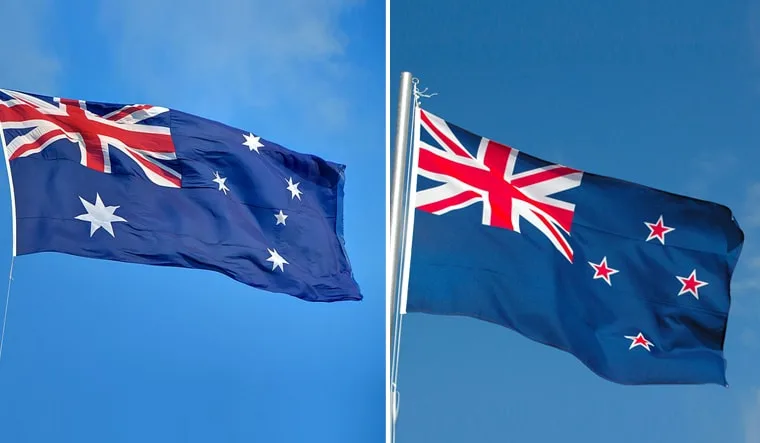
The Pacific is increasingly being viewed through the strategic calculations of Washington and Beijing. For Australia and New Zealand, this presents a difficult foreign-policy challenge: how to maintain longstanding security partnerships with the United States while protecting the economic relationships and regional interests that make engagement with China unavoidable. The question is no longer whether the two countries can balance these competing relationships, but whether they can preserve enough strategic independence to make decisions on their own terms.
Australia and New Zealand occupy different positions in this contest, but their underlying dilemma is increasingly similar. Australia relies heavily on its alliance with the United States for defence and intelligence cooperation, while China remains a major trading partner. New Zealand has traditionally pursued a more independent foreign policy, maintaining close economic links with Beijing while preserving security relationships with Western partners. Both, however, have moved towards closer strategic coordination with Washington as concerns about China's regional ambitions have grown.
This shift is understandable. China's expanding military capabilities, its growing presence in the South Pacific and its increasingly assertive approach to regional disputes have created legitimate security concerns. Pacific island governments are also entitled to examine the implications of foreign military access, infrastructure investment and security agreements for their own sovereignty.
Yet a policy of treating every expansion of Chinese engagement as a strategic threat risks reducing a complex region to a contest between competing powers. It also overlooks the priorities of Pacific island states, whose most immediate concerns often include climate change, economic resilience, infrastructure, healthcare, education and maritime security.
Australia's expanding network of security agreements illustrates the changing regional environment. Canberra has strengthened defence and security cooperation with several Pacific island countries, seeking to reinforce its position as a principal security partner. Agreements with Papua New Guinea, Tuvalu, Nauru, Vanuatu and Fiji reflect an effort to build a more extensive regional security framework. These arrangements also have implications for the scope of engagement that Pacific governments can pursue with external powers, particularly China.
From Canberra's perspective, such partnerships help prevent strategic vulnerabilities from emerging in its immediate neighbourhood. But the expansion of bilateral security arrangements also raises a question about the region's long-term architecture: are these agreements building collective security, or creating overlapping commitments that could deepen divisions if tensions between major powers escalate?
Pacific island nations should not be expected to view their foreign relations exclusively through Australia's security concerns. They have their own national interests, political priorities and development requirements. A partnership that strengthens regional security must recognise their right to determine the nature and extent of their relationships with outside powers.
China's role in the Pacific is not without controversy. Beijing has expanded its diplomatic, commercial and security engagement, while its military modernisation has altered regional calculations. Its submarine-launched ballistic missile test in the South Pacific in July 2026 demonstrated capabilities with direct strategic implications for the wider region. The launch also coincided with growing Australian efforts to strengthen security partnerships with Pacific island governments, intensifying concerns about the region's exposure to great-power competition.
Such developments cannot simply be dismissed as routine diplomacy or commercial engagement. Equally, they should not become an excuse for treating every Pacific nation that engages with Beijing as an extension of Chinese strategic influence. The region's governments must retain the freedom to negotiate economic and development partnerships without being forced into a binary choice between Washington and Beijing.
The United States presents a separate challenge. Its security commitments remain central to the regional balance, but questions about the consistency of American engagement have become more prominent. Changes in US military deployments, competing global priorities and uncertainty surrounding Washington's long-term strategic commitments have encouraged regional partners to consider how much reliance they can place on American power.
For Australia, this uncertainty is particularly consequential. Its defence posture is closely connected to the US alliance, and major military programmes such as AUKUS reflect a long-term commitment to advanced cooperation with Washington and London. These arrangements may strengthen Australian capabilities, but they also increase the importance of assessing whether the country's strategic commitments remain aligned with its own regional priorities.
New Zealand faces a different calculation. Its traditional approach has placed greater emphasis on diplomatic independence and the ability to maintain constructive relations across competing geopolitical camps. However, growing defence cooperation with Australia and the United States, including discussions around participation in AUKUS Pillar II, has generated debate about whether Wellington is moving away from its established foreign-policy approach.
The concern is not that New Zealand should abandon its security partnerships. Rather, it must consider whether deeper integration into arrangements perceived by Beijing as directed against China could narrow its diplomatic room for manoeuvre. A smaller country derives influence not only from its alliances but also from its ability to maintain credibility with governments that do not share the strategic outlook of its closest partners.
The same principle applies to Australia. A close alliance with Washington does not require Canberra to align every aspect of its foreign policy with American strategic preferences. Nor should economic engagement with China be interpreted as an endorsement of Beijing's political or military conduct. Security cooperation and economic diplomacy can coexist, provided both are guided by clearly defined national interests.
The economic dimension is especially important. China remains a major market for Australian and New Zealand exports, and the relationship extends across commodities, agriculture, education, tourism and other sectors. Abruptly weakening these connections would carry costs for businesses, workers and consumers. The objective should therefore be to manage economic exposure through diversification and resilience rather than allow geopolitical tensions to dictate the terms of commercial engagement.
There is also a wider regional dimension that Canberra and Wellington cannot afford to overlook. Pacific island countries are not passive participants in the strategic competition surrounding them. They have repeatedly sought to engage multiple partners, using diplomatic competition to attract investment, infrastructure support and security assistance. Their ability to maintain this flexibility is an important expression of sovereignty.
A regional framework built around mutual respect would be more durable than one based on strategic pressure. Australia and New Zealand can contribute to this by prioritising climate adaptation, maritime surveillance, disaster response, infrastructure and sustainable development alongside traditional defence cooperation. These are areas where regional partnerships can deliver tangible benefits without requiring Pacific governments to choose sides.
The challenge for both countries is to distinguish between legitimate security cooperation and strategic overdependence. An alliance should strengthen a country's ability to protect its interests, not determine those interests on its behalf. Equally, economic interdependence should not prevent governments from addressing genuine security concerns.
The Pacific's future should not be decided exclusively in Washington, Beijing, Canberra or Wellington. The region's island nations must have a meaningful voice in shaping the arrangements that affect their security and prosperity. Australia and New Zealand, given their geographical proximity and longstanding relationships, have a particular responsibility to support that principle.
Great-power competition is unlikely to disappear. But the Pacific does not have to become a permanent arena of confrontation. For Australia and New Zealand, the more sustainable course is to retain strong security partnerships, preserve independent diplomatic judgement and engage China where their interests allow. Their credibility will ultimately depend not on how firmly they align with either power, but on how effectively they protect their own sovereignty while respecting that of their Pacific neighbours.