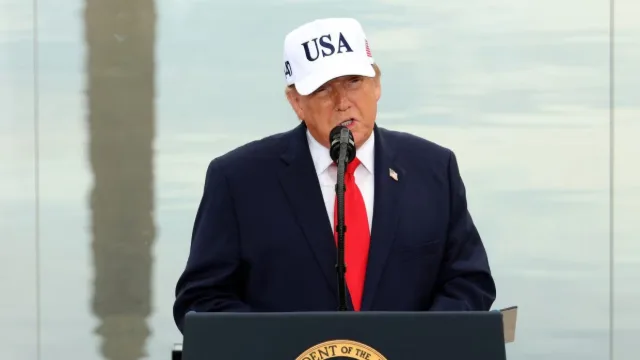
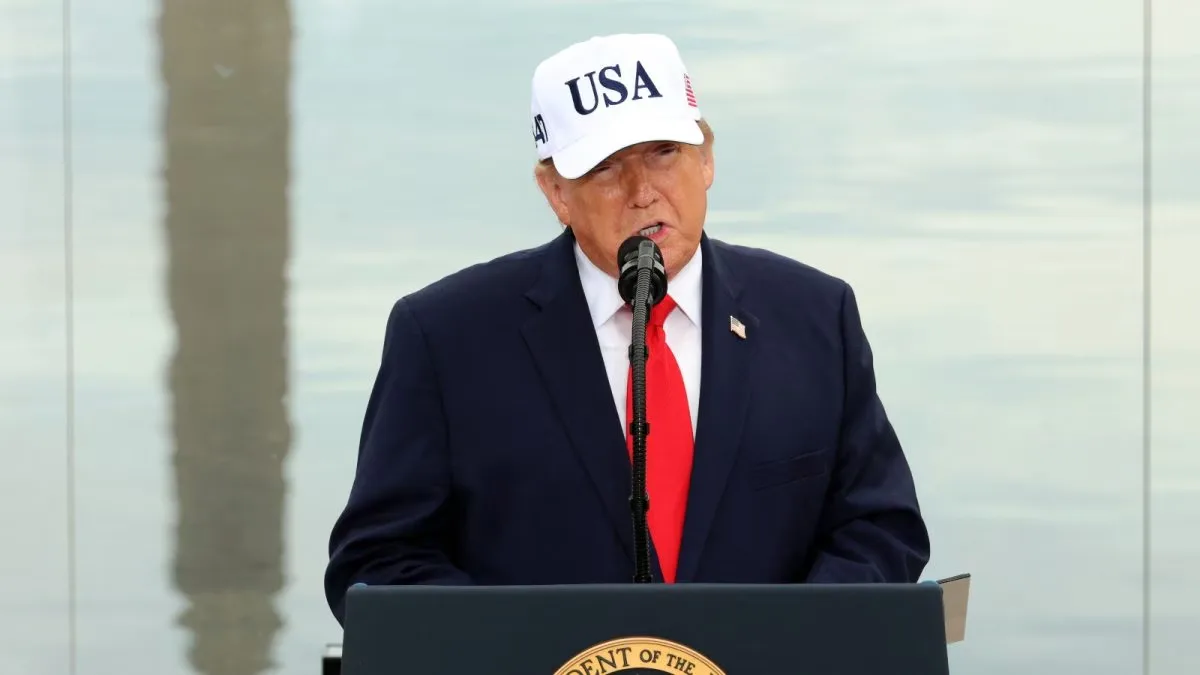
The 2026 US midterm elections have become a major political test for President Donald Trump and his administration. By describing the elections as the “most important of our lifetime” during his final-day campaign speech, Trump has placed the contest within a much broader political narrative, presenting the outcome as consequential for the future direction of the United States.
Midterm elections traditionally serve as a referendum on the sitting president's performance. They determine the balance of power in Congress and can significantly influence the administration's ability to advance its legislative agenda during the remainder of its term.
For Trump, the stakes extend beyond congressional arithmetic. The elections will provide an indication of how voters assess his domestic policies, economic record, immigration agenda and broader political leadership.
A Referendum on Trump's Second-Term Presidency
The significance of the midterms lies in their ability to reshape the relationship between the White House and Congress. Although Trump is not personally seeking re-election, the performance of Republican candidates will have direct consequences for his administration.
Republicans are defending their congressional majorities, while Democrats are seeking to regain legislative influence. A shift in control of either chamber could complicate the passage of legislation, increase congressional scrutiny of executive decisions and create additional obstacles for the administration's policy priorities.
For Trump, maintaining Republican control would provide greater room to pursue his domestic and international agenda. Losing congressional ground, however, could introduce a more confrontational political environment, with investigations, legislative disputes and intensified oversight becoming central features of Washington politics.
The elections will therefore test not only the Republican Party's electoral strength but also the extent to which Trump's political influence can translate into support for candidates competing in individual states and districts.
The Economy and Voter Dissatisfaction
Economic concerns remain an important dimension of the electoral contest. Inflation, household expenses, employment conditions and the cost of living influence how voters assess the performance of the administration.
The Republican campaign has sought to defend Trump's record and emphasise its policy priorities. Democrats, meanwhile, have attempted to turn economic dissatisfaction into an electoral argument against the administration.
This presents a familiar challenge for an incumbent president's party. National political messaging may generate enthusiasm among core supporters, but individual congressional contests are often determined by local economic conditions, candidate credibility and the concerns of voters who do not necessarily share the priorities of either party's most committed supporters.
Trump's extensive campaign appearances demonstrate the importance his administration attaches to the outcome. His repeated efforts to make the midterms a personal political contest also mean that the results will inevitably be interpreted in relation to his leadership.
The Limits of Presidential Campaign Influence
Trump's political movement has demonstrated an ability to mobilise a highly committed voter base. His rallies remain a defining feature of his political identity, allowing him to communicate directly with supporters and dominate the national political conversation.
However, presidential popularity within a political movement does not automatically translate into electoral success for every Republican candidate.
Midterm elections involve a different political dynamic from presidential contests. Voters evaluate congressional candidates on local issues, economic conditions and their views of the administration. Turnout patterns can also differ considerably from those of presidential election years.
The challenge for Republicans is to convert the enthusiasm generated by Trump's campaign appearances into votes across a geographically diverse collection of competitive races.
For Democrats, the opportunity lies in mobilising voters dissatisfied with the administration while presenting congressional elections as a mechanism for restoring legislative checks and political accountability.
Implications for America's Global Position
The outcome will also carry implications for American foreign policy, particularly at a time when Washington is managing multiple international challenges.
Congress plays an important role in defence appropriations, foreign assistance, trade policy and oversight of national security institutions. A divided government could make it more difficult for the administration to secure legislative support for some of its priorities.
For international partners, including India, the political composition of the US Congress matters because American foreign policy is shaped not only by presidential decisions but also by legislative institutions.
India-US defence cooperation, technology partnerships, trade negotiations and wider Indo-Pacific coordination operate within this broader political framework.
A change in congressional control would not automatically reverse existing bilateral commitments. However, it could influence the political environment in which important policy decisions are debated, funded and implemented.
The elections will therefore be watched closely by governments that have strategic, economic and security interests in maintaining stable relations with Washington.
The Political Message Behind Trump's Final Appeal
By calling the 2026 midterms the most important elections of his lifetime, Trump has deliberately elevated their significance beyond the traditional congressional contest.
His message reflects an understanding that congressional control will shape the remaining years of his presidency. It also demonstrates his determination to remain the central figure in Republican politics rather than allowing individual candidates to define the campaign independently.
Yet the final verdict belongs to American voters. Campaign rallies, presidential appeals and party mobilisation can shape the political atmosphere, but they cannot determine the outcome.
The November 3 elections will provide an important measure of the relationship between Trump's political influence and the wider American electorate.
Ultimately, these midterms are about more than which party controls Congress. They will test the durability of Trump's political movement, the public response to his second-term policies and the ability of America's political institutions to function amid deep partisan divisions.
For Trump, the result will shape the political space available to him for the remainder of his presidency. For Washington's international partners, it will offer an indication of the domestic political conditions under which American policy will operate in the years ahead.